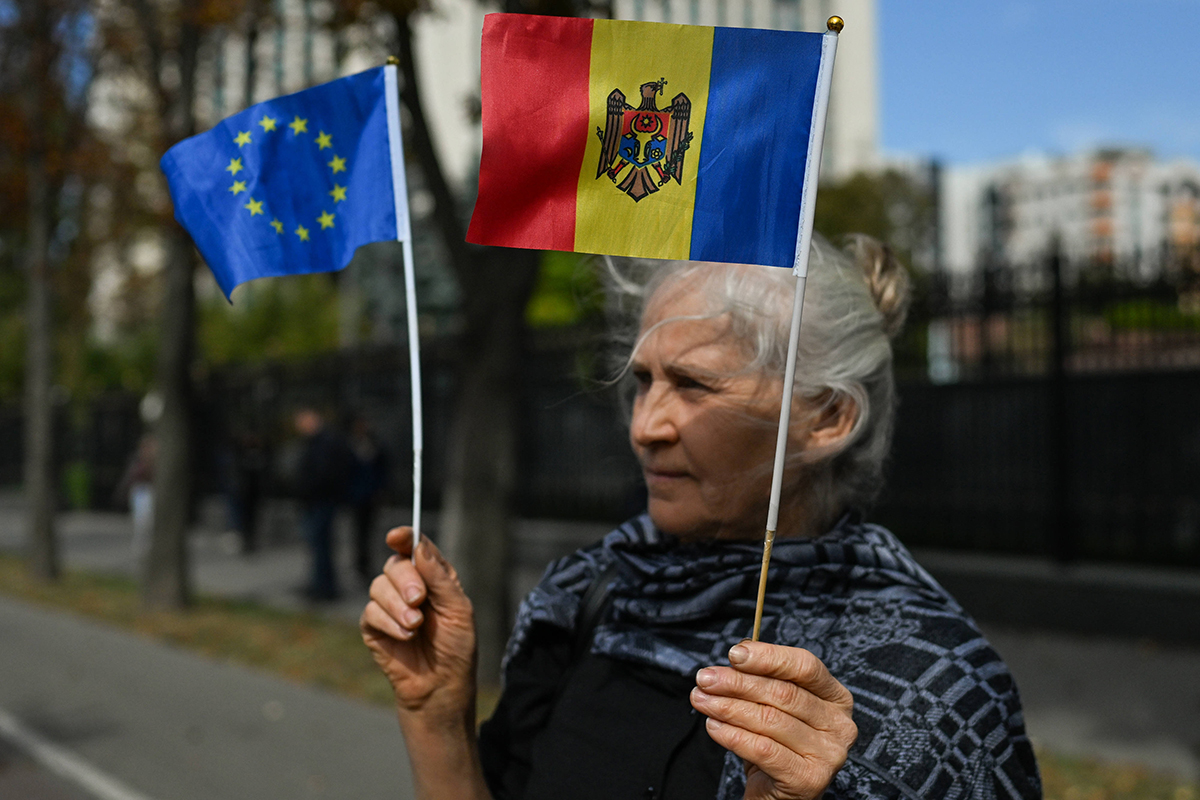

A new round of EU enlargement: Will Moldova become a success story?
As the European Union adjusts its policies in preparation for a new round of enlargement, relations between Moldova and the European Union (EU) have entered a new stage of development. Natalia Stercul (Foreign Policy Association of the Republic von Moldova) analyses the situation.
The Republic of Moldova has been implementing reforms and meeting the conditions and completing procedures necessary for EU accession, all at an accelerated pace. The European Commission has issued a positive assessment of the progress achieved by Moldova in 2025 within the framework of the European integration process. This provides grounds to believe that 2026 may be a decisive year for transforming technical progress into sustainable reforms based on democratic values and the rule of law. Such a transformation will require both the continuation of the current pace of reform implementation, based on the established clusters, and an improvement in the qualitative indicators for the transformation process. The efforts necessary extend considerably beyond the mere fulfilment of technical requirements. At the same time, Moldova now has an opportunity both to accelerate the dynamics of European integration within the established timelines, and with it a chance to make itself a success story among the Eastern Partnership countries.
Cooperation between Moldova and the EU in the conditions of accelerating European integration
Cordial relations between Moldova and the European Union are contributing to the acceleration of the European integration process, which is being shaped, in part, by a high level of EU political support for the reforms undertaken by the Moldova, as well as by the financial and technical assistance being provided by the EU. The EU is Moldova’s main trading partner. In 2024, Moldovan exports to the EU amounted to USD 2,392.4 million (9.6% less than the 2023 total), and accounted for 67.3% of the country’s total exports. In the first three quarters of 2025, exports to the EU totalled USD 1,788.8 million (2.5% more than in the corresponding period of 2024), representing 68.1% of total exports.[1] EU measures providing temporary full trade liberalisation for Moldovan agricultural products (introduced in 2022 in a show of solidarity in connection with Russia’s military aggression against Ukraine and subsequently extended until 24 July 2025) facilitated exports and expanded access for Moldovan producers to the European market.
The EU also mobilised special support measures for Moldova during periods of crisis. These include: direct budget support amounting to EUR 240 million for the most vulnerable consumers amid the energy crisis; humanitarian assistance worth over EUR 66 million to support vulnerable Ukrainian refugees and their host families in Moldova; and more than EUR 32 million worth of investments in Moldova in connection with the Solidarity Lanes initiative, which helps ensure the reliability of supply chains and food security.[2]
For its part, Moldova has been steadily fulfilling its commitments and making consistent progress along its path towards EU membership. This has opened up additional opportunities for the country. For example, the Republic of Moldova succeeded in joining the Single Euro Payments Area (SEPA) on 6 October 2025. In the first month after the country joined SEPA, the volume of transactions to and from Moldova rose by EUR 300 million, exceeding EUR 1.3 billion in total.[3] SEPA membership is already generating tangible benefits: the direct savings in transfer fees associated with these transactions amount to approximately EUR 1.4 million.[4]
The positive dynamics of strategic cooperation between Moldova and the EU have been significantly reinforced by the timely and successful completion of the screening process, the European Commission’s favourable assessment of Moldova’s reform progress (presented in the 2025 country progress report) and the resulting possibility of opening three negotiation clusters. This undoubtedly represents a major breakthrough for Moldova; despite the wide range of internal and external challenges the country continues to face along this path.
Moldova’s success in advancing along the European path sends an important signal to other Eastern Partnership countries, as it demonstrates that integration is possible not merely in principle but also in practice. This may provide some impetus for further progress and help strengthen the positions of these countries in negotiations with the EU. More specifically, Moldova’s successes may serve as a spur to states experiencing difficulties or democratic backsliding to make greater efforts to deepen relations with Europe and may also contribute to strengthening regional cooperation, which could lead to the creation of a united front for addressing common challenges.
Progress in the EU accession negotiations as the primary priority of the Republic of Moldova’s foreign policy
The pro-European authorities of the Republic of Moldova are making every effort to make continuous progress along the country’s European path. This is reflected in the completion or partial completion tasks set for promoting the pro-European agenda. Through its progress on reforms, Moldova met the prerequisites for the launch of accession negotiations, which took place at the first Moldova–EU Intergovernmental Conference in Luxembourg in June 2024. The arrival at this milestone heartened supporters of Moldova’s pro-European trajectory, but it also moved sceptics to ramp up their criticism of Moldova’s European course and Russia to strengthen its efforts to undermine it. As a result, the presidential elections and the referendum on Moldova’s EU accession in 2024, as well as the parliamentary elections in 2025 were accompanied by an unprecedented level of external interference in the country’s democratic processes, attempts to destabilise the state, and heightened internal political confrontation between pro-European and pro-Russian forces. It was in this context that the authorities had to carry out the extensive technical work required to initiate and implement the screening process established to assess the compliance of Moldovan national legislation and administrative structures with EU standards.
EU–Moldova Summit, which was held on 4 July 2025, marked an important step in the official confirmation of the opening of accession negotiations. It served as a catalyst for a unified and synchronised movement within the EU, carrying historical significance for the democratic future of the states involved. At the end of the summit, the parties issued a joint declaration identifying the main priorities for cooperation going forward: strengthening security and defence; economic and financial assistance (including the EU’s allocation of the first tranche of €270 million under the Moldova Growth Plan for 2025–2027); Moldovan convergence with the EU Single Market and support for the country’s economic development; energy security and digital transformation; border management and the reinforcement of regional security.[5]
The constitutional referendum in Moldova, in which 50.38% of voters spoke out in favour of amending the Constitution to enshrine the country’s European course as irreversible and accession as a strategic objective of the country, was held in conjunction with the 2024 presidential election that resulted in the victory of the pro-European President Maia Sandu. Together, the referendum and the election secured Moldova’s strategic path towards EU membership. The authorities were then faced with the necessity of completing an extensive and complex body of work, which they set about with unprecedented determination. The screening process involved the analysis of more than 100,000 pages of national legislation and its comparison with the extensive body of EU law (the acquis), requiring significant administrative and expert effort. Limited administrative capacity and an acute shortage of qualified professionals created additional challenges in connection with managing such a large-scale and technically demanding process. Moldova succeeded in completing the screening before the 2025 parliamentary elections got underway. Substantial efforts resulted in the alignment of more than 500 normative acts with EU legislation.[6] Thus, Moldova reached the readiness threshold required to begin accession negotiations. In essence, the difficulty of the screening process for Moldova is not due to a technical impossibility, but rather to the subsequent stages of integration, which will require it to undergo profound structural transformations under conditions of limited resources and persistent external challenges.
The parliamentary elections in September of 2025 represented a third and final test of Moldova’s democratic resilience. They proved decisive for the continuation of Moldova’s European path of development and the prevention of a foreign policy shift toward rapprochement with Russia. The vision of a peaceful, democratic, and European future outweighed socio-economic concerns and became the central motivating factor uniting the pro-European electorate.
The newly elected parliament’s composition generated political sensitivity, as the continued representation of major pro-Russian parties called into question the legislature’s ability to achieve broad consensus and maintain coherence in its decision-making. Boycotts, obstruction, and disruptions of parliamentary sessions are fully to be expected. Yet Moldova now needs a strong and effectively functioning legislature able to reinforce the state’s institutional stability and facilitate the country’s progress toward EU membership. Strategic communication and the collective pursuit of optimal solutions are complex yet essential tasks, while the principles of the rule of law remain fundamental to ensuring the proper functioning of state institutions and adherence to democratic norms.
External challenges and security concerns continue to be of paramount importance for Moldova. Addressing them will require more comprehensive and pragmatic approaches, including on the part of the country’s European partners. Moldova will not be able to cope with its security and defence challenges without external assistance. The corresponding cluster in the negotiation process is one of the most decisive for Moldova in many respects, as it relates directly to the preservation of Moldovan territorial integrity and its ability to maintain steady democratic development.
A new level of interaction with the EU: Aligning expectations with reality
While awaiting the official opening of the negotiation process, Moldova continues to carry out reforms and adjust national programmes and plans to reflect new conditions and requirements. Despite the progress noted in the European Commission’s report and Moldova’s fulfilment of the conditions for opening three negotiation clusters – Fundamentals, External Relations, and the Internal Market – further reform of these sectors is still necessary. The implementation of the fundamental principles and values remains a challenge for Moldova, which is still having difficulty ensuring the rule of law in the face of strong resistance from entrenched corruption networks, political fragmentation and a high degree of polarisation, as well as a complex geopolitical environment. All these destructive tendencies have the potential to be serious obstacles in the negotiation process with the EU, given that adherence to the principles of the rule of law is a decisive criterion for membership.
The 2024 Corruption Perceptions Index indicates that Moldova has made some progress in combatting corruption – it scored 43 out of 100 points (Moldova’s average score on the corruption index over the 1999–2024 period was 31.50 points, according to Transparency International, with the 2024 score being the highest and the 2002 score (*21.00) the lowest.[7] Nonetheless, corruption remains a systemic problem in the country, undermining trust in state institutions and obstructing efforts to establish an effective and impartial judiciary. Reports of the exertion of political pressure on the judiciary and law enforcement bodies, as well as of abuses directed against the opposition further erode the rule of law. Societal polarisation results in ongoing political instability, with the political leadership, the opposition and their respective supporters engaged in continuous confrontation, often accompanied by mutual accusations of legal violations and abuses of power. This contributes to the further polarisation of society, in addition to impeding the coherent implementation of reforms aimed at strengthening democratic values.
Another matter requiring careful attention is the situation with respect to the independence and effectiveness of the judiciary, which is essential for the functioning of a fair legal system. Moldova has yet to make significant progress when it comes to increasing public trust in the justice system. However, an updated set of disciplinary rules has provided necessary clarifications regarding oversight timelines and procedures. Efforts to accelerate court proceedings through digital tools have resulted in the reduction of delays in judicial processes. Gradual reforms are enhancing the authority of self-governing judicial and prosecutorial bodies, such as the Superior Council of Magistracy and the Superior Council of Prosecutors. A specialised anti-corruption commission has been established to expedite the handling of corruption cases referred to the courts by prosecutors, and thus serve as an effective mechanism to accelerate the administration of justice.
Particularly noteworthy in this context is the progress made with regard to the prosecution of cases of high-level corruption. As a result of reforms, the procedure in such cases now involves enhanced investigative capabilities and strengthened coordination among the relevant authorities. However, efforts to ensure a fair justice system continue to face challenges. Judges are not always fully free of political and administrative influence, raising questions about the objectivity of judicial decisions.
The introduction of digital tools for asset declaration and the registration of beneficial owners have also had positive effects, increasing transparency and contributing to the prevention of financial malpractice. A targeted strategy reduces the influence of powerful groups in political decision-making and the economy through stricter asset verification, contract monitoring, and oversight of cross-border financial flows.
Moldova is strengthening financial integrity through the Public Internal Financial Control (PIFC) system, which is aimed at standardizing risk assessment and improving fraud detection.[8] The unified project portfolio of the Ministry of Finance ensures transparency in public investments. Expanded digital monitoring of suspicious transactions reinforces anti-money laundering efforts. A centralised database system will consolidate financial data across agencies, enhancing oversight by the Ministry of Finance and antitrust authorities. Finally, Moldova is aligning its state aid policy with EU competition rules aimed at fostering fair competition. Reforms include the updating of the State Aid Law and the improvement of oversight of public subsidies and government interventions. Achieving these objectives will require not only technical implementation capacity but also effective practical operation.
Challenges also exist in relation to the internal market, the country’s economic development, and the functioning and competitiveness of the domestic market, labour market, private and particularly the agricultural sectors. In October 2024, the EU adopted the Moldova Growth Plan, a support package worth 1.8 billion euros that is supported by a financing mechanism to implement reforms and promote economic growth for the period 2025–2027. Strong coordination among national institutions in Moldova is crucial in order for this comprehensive package to have the greatest possible impact, as it is the only way to guarantee the timely implementation of the measures outlined in the reform program. The allocation of the resources is conditioned on this high level of coordination. In addition, the management of investment projects must be strengthened, drawing on the best practices of the Organisation for Economic Cooperation and Development (OECD). This will improve resource efficiency and minimise political patronage, while ensuring that the project selection and implementation process remains transparent and open to broad participation.
The vulnerability of the private sector is one of the main impediments to a swift implementation of the EU Growth Plan, as this vulnerability hinders the rapid adaptation to new conditions and the introduction of structural reforms. Key points of vulnerability include limited access to financing, low productivity, a shortage of skilled personnel, and the need to modernise business sector and its networks. Addressing these issues will require investments, reforms, and the provision of support aimed at enhancing the competitiveness and resilience of Moldovan enterprises.
A key priority for economic reforms is the reform of public financial management with a view to increasing the efficiency of public expenditures and strengthening budgetary policy. This reform must encompass the reorganisation of state institutions, the stabilisation of public finances, a consolidation of the tax base, and the improvement of tax administration. Calculations and forecasts indicate that a 30% reduction in allocations for “general actions” in the state budget should enhance budget transparency.
Strengthening public governance is crucial to minimising bureaucratic inefficiency and enhancing institutional effectiveness. The restructuring of central government entities subordinate to the Cabinet of Ministers will optimise government operations, making the public sector more efficient and responsive. The implementation of a centralised human resource management information system will improve recruitment and management processes for civil servants, ensuring a more transparent and merit-based hiring system. The introduction of a unified payroll reform will help attract and retain qualified personnel, addressing the persistent shortage of talent in the public sector. Improved management of public investments and the introduction of debt sustainability safeguards are essential for achieving fiscal stability. Increasing the share of public capital expenditures to 90% of budgetary allocations by 2027 will enhance the efficiency of large-scale investment projects and accelerate infrastructure modernisation.
Given the limited progress achieved in the area of administrative governance and the importance of administrative reform, this is another area that requires close attention. Agriculture and the environment remain among the most vulnerable areas in this respect. Substantial work is also needed in the regulation of regional policy.
Issues of foreign relations and security, particularly in the context of the Transnistrian conflict and the war in neighbouring Ukraine, further complicate the systematic implementation of reforms and the fulfilment of conditions required to advance in the negotiation process. The absence of a coordinated position on Transnistria, coupled with the lack of significant progress in reintegration and the restoration of Transnistria under Moldova’s legal framework, represents a serious obstacle to Moldova’s advancement toward EU membership.
Conclusions and recommendations
Thus Moldova still faces challenges in areas that are particularly vulnerable and difficult to reform, and it must address these in order to proceed with a pragmatic and effective implementation of the tasks lying before it. At the same time, progress in EU accession negotiations remains the primary priority of the Republic of Moldova’s foreign policy. It is imperative for external diplomatic success to be reinforced by domestic reforms and economic growth, enabling Moldova to fully capitalise on European opportunities and truly become a success story among the Eastern Partnership countries.
Since the final decision on Moldova’s accession to the EU requires the unanimity of all EU members, expectations of synergies among EU member states regarding enlargement in Moldova are indeed high. By steadily advancing along its European path, Moldova aspires to become a European success story and to turn its “European dream” into reality. However, the successful fulfilment, despite many challenges, of technical conditions may lead the adoption of a view of the opening of the negotiation process that is somewhat illusory in terms of expectations for the practical implementation of the clusters. In this situation, it is necessary to focus efforts on achieving tangible results from the reform process. It is important to remember that the EU has the right to suspend the negotiation process in the absence of adequate outcomes. This could delay the established timelines and prolong the reform process. To avoid such setbacks, the following recommendations are considered important:
- Ensuring the functionality of democratic governance must become a defining task for Moldova’s authorities. The effectiveness of democratic institutions should be a domestic political priority and serve as a unifying force within society and the state, regardless of the political differences between the ruling party and the opposition.
- Close cooperation between state institutions, civil society, and the private sector is necessary and demands a shift away from past policies of selective interaction. It is important to ensure that all representatives of civil society and the private sector are granted equal access to participative processes. This will enhance stability, increase resilience, and allow the creation of a unified front in implementing the European agenda.
- The private sector’s readiness to adjust the forthcoming changes and to take full advantage of emerging opportunities is crucial. The business community should be informed in advance about potential costs for small and medium-sized enterprises. The mechanical transposition of EU rules into national legislation is not the right approach here; the provision of ongoing support for adaptation to newly introduced standards will be necessary. Ensuring access to funding is particularly important, as small and medium-sized enterprises often face difficulties obtaining loans and other financial resources, which hinders their growth and modernisation.
- Upcoming legislative changes will entail higher compliance costs and increased competition. However, they will also open opportunities for access to new markets, funds and financing, technologies, and innovations. Given that alignment with EU standards will have complex and multidimensional consequences for Moldova, it is important for European partners to strengthen consultative mechanisms for the provision of informational and technical support to Moldovan state institutions and private companies in relation to the implementation of EU legislation, as well as awareness-raising activities on how they can benefit from these transformations.
- Best practices in financial market support and financial control are crucial. Policies and practices developed by the German government, along with assistance in their implementation tailored to Moldova’s specificities and EU requirements, would help create a more resilient financial market environment.
[1] International trade of goods of the Republic of Moldova in December 2024 and 2024. National Bureau of Statistics of the Republic of Moldova // https://statistica.gov.md/en/international-trade-of-goods-of-the-republic-of-moldova-in-9539_61660.html; International trade of goods of the Republic of Moldova in September 2025. National Bureau of Statistics of the Republic of Moldova // https://statistica.gov.md/en/international-trade-of-goods-of-the-republic-of-moldova-in-9539_62087.html
[2] The EU and Moldova. October 2024 // https://old.gov.md/sites/default/files/the-eumoldova-factsheet-2024_en.pdf
[3] Moldovans saved €1.4 million in transfer fees in the first month after Moldova joined SEPA // https://eu4moldova.eu/en/moldovans-saved-e1-4-million-in-transfer-fees-in-the-first-month-after-moldova-joined-sepa/
[4] Moldova now connected to SEPA: euro payments on the same conditions as in the EU // https://euneighbourseast.eu/news/latest-news/moldova-now-connected-to-sepa-euro-payments-on-the-same-conditions-as-in-the-eu/
[5] Joint Declaration following the first Republic of Moldova — EU Summit, 4 July 2025, Chisinau, Republic of Moldova // https://www.consilium.europa.eu/media/3t3l1gjs/eu-moldova-summit-declaration_20250704.pdf
[6] Moldova has completed the screening in Brussels. Deputy Prime Minister: Let’s be proud of our country // https://ipn.md/en/moldova-has-completed-the-screening-in-brussels-deputy-prime-minister-lets-be-proud-of-our-country/
[7] Corruption Perceptions Index. Moldova 2024 // https://www.transparency.org/en/countries/moldova
[8]Reform Agenda under the Republic of Moldova‘s Growth Plan for the years 2025–2027 // https://mded.gov.md/wp-content/uploads/2025/05/Agenda-_260-en.pdf
Author:
Natalia Stercul (Foreign Policy Association of the Republic of Moldova)

Hat Ihnen unser Beitrag gefallen? Dann spenden Sie doch einfach und bequem über unser Spendentool. Sie unterstützen damit die publizistische Arbeit von LibMod.
Spenden mit Bankeinzug
Spenden mit PayPal
Wir sind als gemeinnützig anerkannt, entsprechend sind Spenden steuerlich absetzbar. Für eine Spendenbescheinigung (nötig bei einem Betrag über 200 EUR), senden Sie Ihre Adressdaten bitte an finanzen@libmod.de