
Elections in Hungary – the increasingly radical campaign signals what is at stake
After more than a decade of not facing a credible challenger, Hungarian Prime Minister Viktor Orbán is contending with an extremely tight electoral contest that could see him being forced out of power, writes Zsuzsanna Szelényi in her analysis in the run-up of the elections. She is a former Hungarian MP, director of the Central European University’s Democracy Institute, and the author of ‘Tainted Democracy: Viktor Orban and the Subversion of Hungary’.
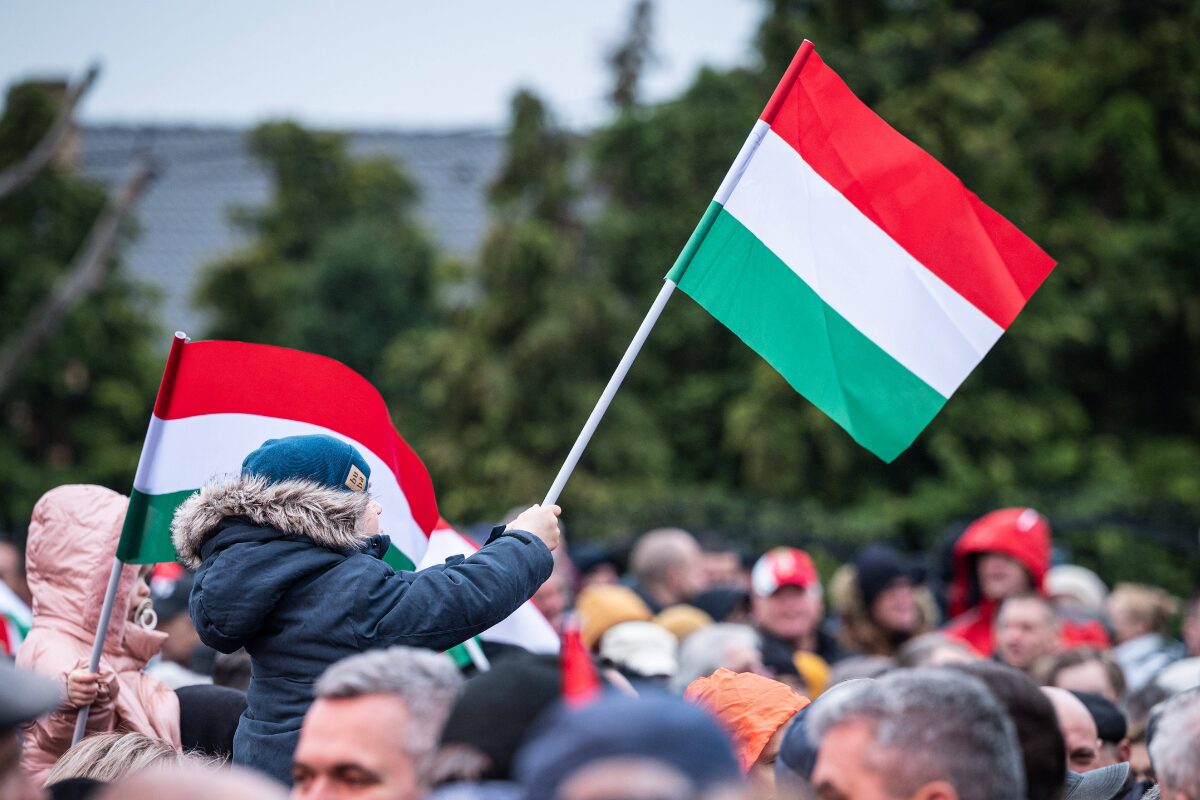
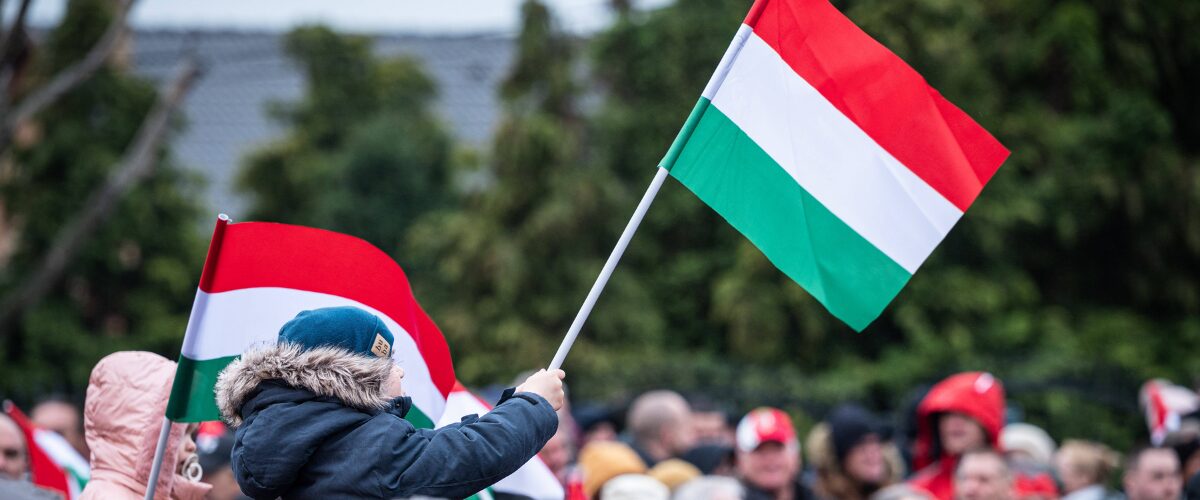
Hungary’s March 15th national holiday, commemorating the revolution of 1848, symbolised how close of a race Orbán is facing. A few miles from Orbán’s own mass gathering in Budapest, another rally, led by opposition insurgent, Péter Magyar, drew hundreds of thousands of people, four weeks before Hungarians are going to the polls on April 12 to elect their next parliament.
Orbáns “illiberal democracy” as a model and global example
Prime Minister Orbán has in recent years become a figure of outsized global significance, given Hungary’s small population of less than 10 million people. Within the space of a week, he can meet Vladimir Putin, Xi Jinping and Donald Trump. Having hosted Orbán multiple times at his Mar-a-Lago resort and the White House, Trump reiterated his “total endorsement” of the Hungarian leader in March. Orbán has also become a model for right-wing populists abroad, having hosted a wide range of far-right leaders in Budapest over the years. His international stature rests on two things: repeated electoral victories at home, and the ideological confidence with which he has waged war on Europe’s liberal mainstream.
For 16 years Orbán and his party, Fidesz, have dominated Hungarian politics without a credible challenger. This has profoundly reshaped Hungarian politics and civil society. Fidesz has bent institutions and public resources to partisan ends, reshaping the state itself. Orbán’s illiberal system has concentrated power to an exceptional degree, constructed a loyalist state, and deployed public money and public institutions to promote the values of a closed society through schools, cultural bodies and the media. Over the past decade tens of millions of euros of public funds were spent building an international illiberal network: this includes hosting conservative forums such as CPAC; using vehicles such as the far-right ‘Patriots for Europe’ group to undermine EU action; and funding billions to think-tanks like MCC, designed to export his ideas across Europe and the US.
The opposing candidate and challenger
Péter Magyar, a new political star, is threatening Orbán’s regime in this election cycle. Once a little-known insider within Fidesz, Magyar launched an anti-establishment movement in the spring of 2024. Having long been part of the Fidesz system, Magyar’s explosive revelations about the inner workings of the Orbán regime galvanised many people. A decade and a half of frustration with systemic corruption, economic malaise, controversial foreign policy and repeated scandals exposing the regime’s hypocrisy created an opening for a new political entrepreneur: ambitious, combative and promising to dismantle Orbán’s system. Within months Magyar’s party, Tisza, was running neck-and-neck with Fidesz in opinion polls; it has since opened a lead of 10 percentage points, according to independent pollsters.
Magyar’s rise represents an existential challenge for the ruling Fidesz party. An electoral defeat would cost Orbán not only his exceptional power at home, but much of his influence abroad. It is no surprise, then, that from the outset Magyar became the target of ferocious smear campaigns, including a threat to release a sex tape of the opposition leader. Yet over the past two years, as he travels the country, his support has continued to grow. The belief that he might genuinely unseat Orbán has forged a strong bond of trust between him and his supporters, and, so far, accusations have struggled to stick. However, a clear poll lead is not the same as certain victory.
16 years in power: The transformation of Hungary
Hungary is not a liberal democracy, and its elections are not fair. In its latest Report of V‑Dem, Hungary is categorized as electoral autocracy further deteriorating in 2025, the only EU country in this group. Fidesz, which enjoys a two-thirds constitutional majority in parliament, has repeatedly rewritten the electoral rules to suit its own interests: over 16 years, the system has been amended more than 30 times. At a recent closed-door campaign meeting, Orbán reportedly acknowledged that the electoral system heavily favours the winner, warning activists not to confuse past mandate totals with genuine levels of support. Preliminary modelling suggests a stark asymmetry: Tisza may need around 54% of the popular vote to secure a simple parliamentary majority, while Fidesz could potentially win a constitutional supermajority with as little as 45%.
To ensure its survival in power, Fidesz has once again deployed state resources to buy electoral goodwill. The government has directed a flood of handouts toward critical voter blocs, particularly the middle class, ranging from subsidised housing loans and teacher pay raises to tax exemptions for large families and bonuses for law enforcement. The fiscal cost is immense: by the end of February 2026, a staggering 42 percent of the annual budget deficit had already been exhausted.
Campaigning: politics as war
It is also relying on its formidable political communications machine, which dwarfs the reach and spend of its rivals. Successful election campaigns in the past have featured the purported threats of ‘returning communists’, ‘global financiers’, ‘hordes of Muslim migrants’, and ‘Brussels bureaucrats’, to which the domestic opposition is, invariably, allied. Orbán sees politics as war, and every election is a chance to prove he is prevailing against an ever-shifting enemy.
Fidesz’s 2026 campaign is no different, but with a newfound, technologically-driven intensity. This time, Ukrainian President Volodymyr Zelensky is portrayed as the embodiment of agent of foreign pressure, while Péter Magyar and his Tisza movement are branded as the “domestic agents” of war and chaos, linked with Kyiv and Brussels. Government-aligned outlets and billboards — echoing Orbán’s own rhetoric — have saturated the public square with anti-Ukrainian material, including AI-generated videos depicting apocalyptic scenes of conflict, economic collapse, and Hungarian soldiers returning in coffins. Beyond the rhetoric, Orbán has blocked a vital €90 billion EU loan to Ukraine and the government carried out a special forces raid on vehicles transferring cash between Austrian and Ukrainian banks via Hungary. A day later the Hungarian parliament passed a bill allowing the government to seize the assets of Ukrainian state asset, investigating if it was aimed to support the Hungarian opposition. Conflict between the Hungarian and Ukrainian government is escalating in the last weeks of the campaign, serving Orbán’s interest to heighten war hysteria among Hungarian citizens before the elections on April 12. Beyond the conspiracy-based campaigns these bizarre episodes demonstrate the high stakes of the election and allegedly foreign influence.
The Moscow-Budapest-axis
According to investigative reports, Orbán is also counting on help from Moscow, which sees him as a reliable ally in the EU. The Kremlin has reportedly dispatched a team of political technologists to Budapest to aid Orbán in his election campaign. Highlighting how close ties between Hungary and Russia have remained since the invasion of Ukraine, the Washington Post recently reported that Hungarian Foreign Minister Péter Szijjártó for years made regular phone calls during breaks at EU meetings to give his Russian counterpart, Sergei Lavrov, “live reports on what’s been discussed”.
Smear campaigns targeting Magyar have also undergone a dangerous evolution in both focus and intensity. The state’s rhetoric, blurring the line between political opposition and national betrayal, has moved beyond character assassination – sparking fears about the prospect of state-incited violence or serious physical incidents in the coming days.
What happens on April 12 will matter enormously, both for Hungary and for Europe.
Possible scenarios
A narrow Fidesz win would probably trigger protests from opposition voters, particularly if the party secured more seats despite losing the popular vote. In this scenario, Hungary would likely slide into a more overtly repressive form of minority rule, further emboldening Europe’s radical right.
If Tisza were to win the elections but fail to secure a constitutional majority in parliament, it would face immense difficulties. A Tisza government would inherit not only a country in economic and social distress, but also a deeply divided and morally exhausted society. Even if it lost the elections, Fidesz would remain a powerful force in parliament and would do all it could to undermine Magyar’s administration. Over 16 years the ruling party has embedded loyalists across state institutions who could obstruct the new rulers, especially if Orbán remained leader of the party. Hungary’s foreign policy, however, would likely change to a more conciliatory mood and collaborative mode from the first day. However, changing policy to Russia and Ukraine may require more time. Under Orbán’s rule Hungary’s relations were profoundly changed with both countries, public sentiment was manipulated analysing opportunities in the new context will require time.
No one should expect the swift restoration of pluralist democracy in Hungary, even in the case of a decisive opposition victory. However, election day could mark the beginning of a democratic renewal.

Hat Ihnen dieser Artikel gefallen? Wenn ja, können Sie die unabhängige redaktionelle Arbeit und den Journalismus von LibMod über ein einfaches Spendentool unterstützen.
Spenden über PayPal

Wir sind als gemeinnützige Organisation anerkannt, dementsprechend sind Spenden steuerlich absetzbar. Für eine Spendenbescheinigung (ab einem Betrag von 200 EUR erforderlich) senden Sie bitte Ihre Adressdaten an finanzen@libmod.de