
Russia’s War Economy: Solvent but not Sustainable
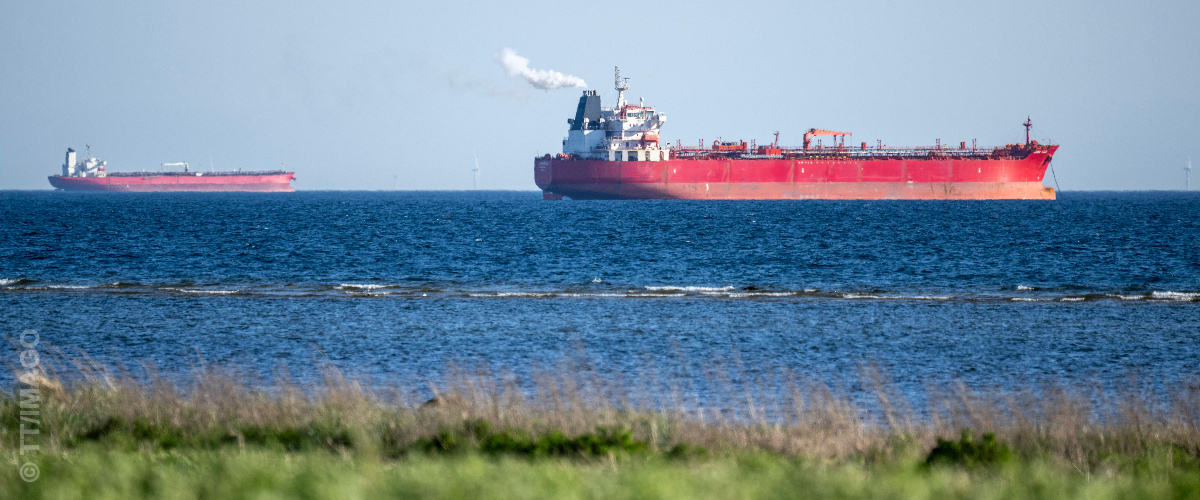
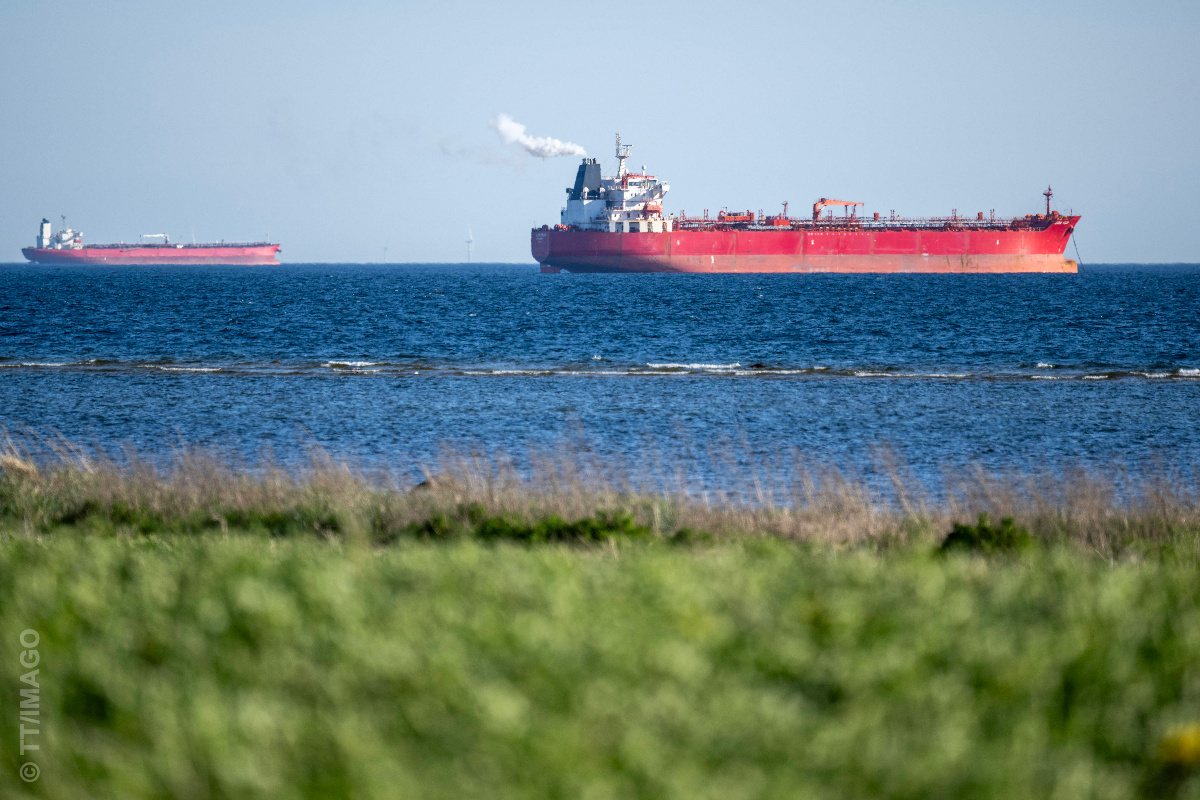
Oil tankers Sea Owl I and Jin Hui anchored west of the port of Trelleborg this May, after Swedish coast guards stopped them on suspicion of being part of the “shadow fleet” used by Russia to circumvent sanctions.
While sanctions are biting, Moscow can still afford its war against Ukraine for years to come. The question is how much of its future it is prepared to mortgage in order to do so, argues Alexander Kolyandr.
Russia’s federal budget is no longer just a ledger. As the gap between the military and civilian economies widens with every quarter, the budget has become the main policz instrument and the main driver of growth, or the lack of it. Read properly, the 2027 draft shows where the country is heading: not towards collapse, but towards a slow, grinding decline.
The government has submitted the draft to parliament, where the horse-trading has begun, so nothing is final. The headline numbers look tidy: the deficit narrows to 2.2 per cent of GDP from an estimated 3.2 per cent this year, and spending barely rises in nominal terms, a real-term cut. Defence reportedly gets 17.1 trillion roubles, 35 per cent of the total. But that figure looks like a copy-paste of this year’s actual spending, which blew far past the 12.1 trillion budgeted for 2026. Debt service, at 4.57 trillion roubles, will exceed spending on health and education combined.
The easy money is gone
The first years of the full-scale war were cheap for Russia, at least in fiscal terms. Moscow sat on 8.43 trillion roubles of liquid reserves in the National Welfare Fund (NWF). Oil prices were high, and a weakened rouble delivered higher fiscal revenues for every barrel. A Keynesian jolt of military spending, signing bonuses and death compensation boosted consumption. Capital trapped inside the country by Western sanctions and the Kremlin’s own exit restrictions had nowhere to go but domestic investment. And there was still room to raise taxes.
Each of those cushions is now exhausted or delivering ever smaller returns. Liquid NWF assets are down to 3.9 trillion roubles.
Urals is expected to average at 73 US dollars a barrel in 2027, just a notch lower than the average price in 2022, but the budget is getting less from it.
When the Iran war briefly pushed oil above 100 dollars in 2026, little of the windfall reached the budget: an overvalued rouble, propped up partly by sanctions that choke imports and capital outflows, shrank the rouble value of every export dollar, and payments to oil companies to hold down domestic petrol prices swallowed much of the rest.
Real income growth, above 7 per cent in 2024 and 2025, is hovering around 1 per cent. Fixed investment fell 9.9 per cent year on year in the first half of 2026, and the Economy Ministry now expects a 5.4 per cent drop for the whole year, against 1.5 per cent forecast in the spring.
Guns, not butter
So the 2027 budget does the only thing left: it pays for guns by squeezing butter. With broad tax rises spent, the Finance Ministry is reaching for narrower levies. Dividends and deposit interest will be taxed progressively, which hits the very stock market the government keeps touting as the future source of long-term capital. Purchases on foreign marketplaces will carry 22 per cent VAT. Utility tariffs rise 11 per cent next July rather than the planned 8.7 per cent, almost three times the central bank’s 4 per cent inflation target, while federal spending on housing and utilities is cut by a third by 2029. The regions, which pay much of the recruitment bonuses, absorb cuts and are offered deferrals on their debts instead of money.
The rest is borrowed. Domestic borrowing is planned at 7.7 trillion roubles next year, 2.3 trillion more than previously intended. Domestic state debt has already climbed from 23.7 trillion roubles at the start of 2025 to 33.2 trillion. Voluntary demand is thin. In July the government stopped selling the fixed interest debt to banks, unwilling to pay the yield of more or less 16 per cent. When the Finance Ministry sold a 1 trillion rouble floater, a debt, whose interest is tied to inflation, in September, systemically important banks took 83.6 per cent of it, a day after drawing an extra 940 billion roubles from the Central Bank via repurchase operation (repo), effectively borrowing the money from the central bank to finance the government.
A budget built on hope
The budget also rests on ambitious assumptions: 1.4 per cent growth, higher than any outlook, including the Central Bank’s, inflation lower by a third, and, above all, stable defence spending.
Moscow has not hit a single deficit target since 2022. The 2025 plan of 0.5 per cent of GDP ended at 2.6 per cent; the 2026 target of 1.6 per cent will end at 3.2 per cent. This year’s spending plan was breached in February. The front, not the Finance Ministry, writes the bill.
The numbers are best read as a message to the Bank of Russia: we have done our bit, now cut rates. But a budget that taxes savings, raises tariffs and borrows at 14–15 per cent to buy foreign currency for the NWF is not disinflationary. Inflation, in turn, widens the gap between the two economies. The defence sector is paid upfront at state-set prices, enjoys subsidized borrowing rates and priority access to the stretched infrastructure; the civilian sector faces dearer credit, weaker demand and heavier taxes. Consumption, savings and investment all take the hit.
A mortgage on Russia’s future
Financially, Russia can afford this war for a long time. The real question is the price of the mortgage on its future, and the interest is compounding.
Debt is the most literal of those payments. At about 20 per cent of GDP, rising to 21.7 per cent next year, Russia’s state debt looks trivial next to France’s 119 per cent, America’s roughly 120 per cent or Britain’s 95 per cent. But the burden lies not in the stock but in its price. Cut off from foreign lenders, Moscow can borrow only at home, from banks and a thin pool of savers, at high rates set by a central bank fighting war-driven inflation, so the higher inflation, the higher the bill.
The ten-year yields of Russian government OFZ bonds are at about 15 per cent, roughly nine points above inflation. In the US, Britain and France, real yields are around two points. Russia pays four to five times as much in real terms on a fifth of the debt.
The result is that interest will absorb about 8 per cent of federal spending this year and 9.4 per cent in 2027, against roughly 13 per cent of US federal outlays, 13 per cent of the French state budget and close to a tenth of British public spending. To finance the war, Russia is already paying a Western-sized interest bill on a fraction of Western-sized debt, and the gap is closing from the wrong side.
Western governments hardly borrow only for growth either. But Russia pays four to five times their real rate and spends the money on the least productive item in its budget: weapons that are fired or destroyed, and soldiers’ pay that feeds inflation. The debt buys no future output to service it.
Underinvestment means ageing equipment, slower technological progress and more accidents in utilities, transport and industry. A state that has run down its reserves and pre-committed its budget will have less money both to prevent such failures and to deal with them. Inflation makes the population poorer and keeps rates high, which stifles investment further. The banks’ problems are being swept under the carpet: lenders restructure and reclassify bad loans, hoping that lower rates, a stable budget or softer regulation will make them go away
None of this points to imminent collapse. It points to a slowly degrading economy: one that functions, pays wages and fills orders, but grows poorer, less productive and more brittle every year.
How long can Russia keep paying for the war?
How long Russia can keep financing a militarized economy depends, ultimately, on how much inflation its people will tolerate. So far, the answer has been: a lot. Households expect inflation of 14 per cent, and two-thirds of Russians told state pollster VTsIOM in July that the hardest times still lay ahead, the highest share since 2020. Yet gloom has not turned into pressure.
The obvious remedy, a profound de-escalation and a peace dividend, is not on the cards, whatever parts of the elite may privately wish. The risks are external and sudden: a global downturn that drags oil lower, an accident the state cannot afford to fix, another turn of the sanctions screw.
However, as long as Moscow can sell commodities at roughly current prices and force households and businesses to swallow inflation and falling living standards, the system will survive. Survival is not a future, and the future it is buying is a gloomy one.
- Alexander Kolyandr is Europe Director at the Eurasia Group risk consultancy, focusing on the politics and economy of Russia, Ukraine, and the broader Eurasia region. A native of Kharkiv, Ukraine, Alexander began his career in journalism, covering business, commodities, and macroeconomics for the BBC, Dow Jones Newswires and The Wall Street Journal, where he served as a Senior Correspondent in Moscow. He later transitioned to financial markets, spending several years at Credit Suisse in Moscow and London as a strategist and senior economist focused on Russia, the CIS, and emerging-market geopolitics. He holds a degree in Mathematics from Kharkiv State University and pursued doctoral studies at Université Paris VII in France. He co-authored a widely read newsletter on the Russian economy for The Bell and is a Senior Fellow at the Center for European Policy Analysis (CEPA).

Hat Ihnen unser Beitrag gefallen? Dann spenden Sie doch einfach und bequem über unser Spendentool. Sie unterstützen damit die publizistische Arbeit von LibMod. Wir sind als gemeinnützig anerkannt, entsprechend sind Spenden steuerlich absetzbar. Für eine Spendenbescheinigung (nötig bei einem Betrag über 200 EUR), senden Sie Ihre Adressdaten bitte an finanzen@libmod.de