
Russia and China: Not brothers in arms but partners by necessity
Russia could hardly carry out its war against Ukraine without China’s technological and economic support, which allows Moscow to bypass Western sanctions. We discussed the implications for Western policymakers at a joint event with the New Eurasian Strategies Centre (NEST) held at the sidelines of the Munich Security Conference. Konstantin Eggert reports.
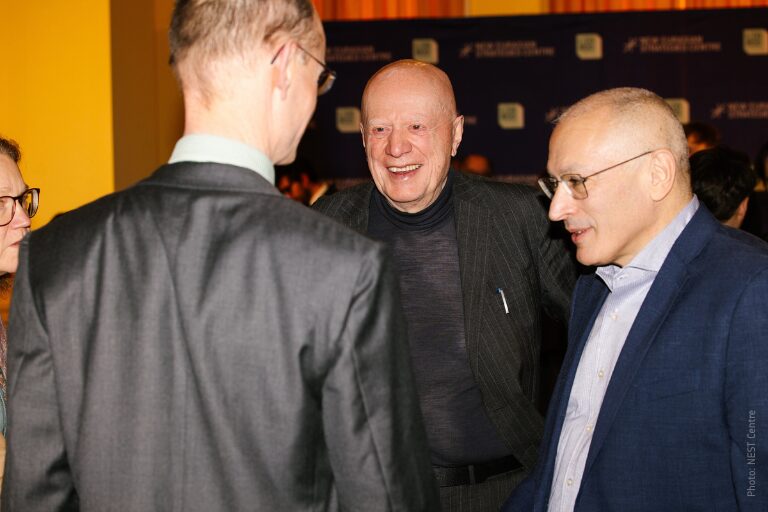
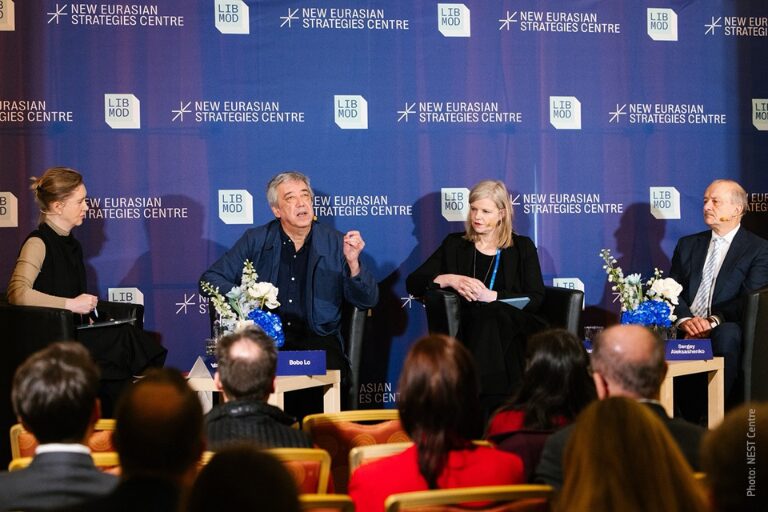
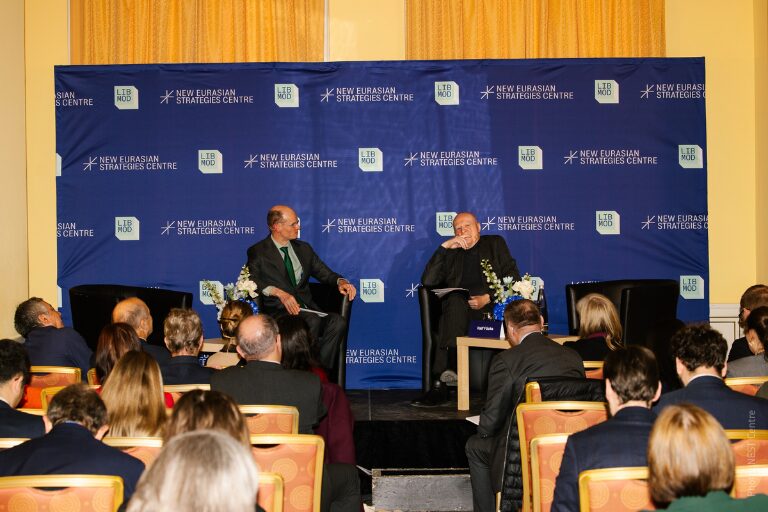

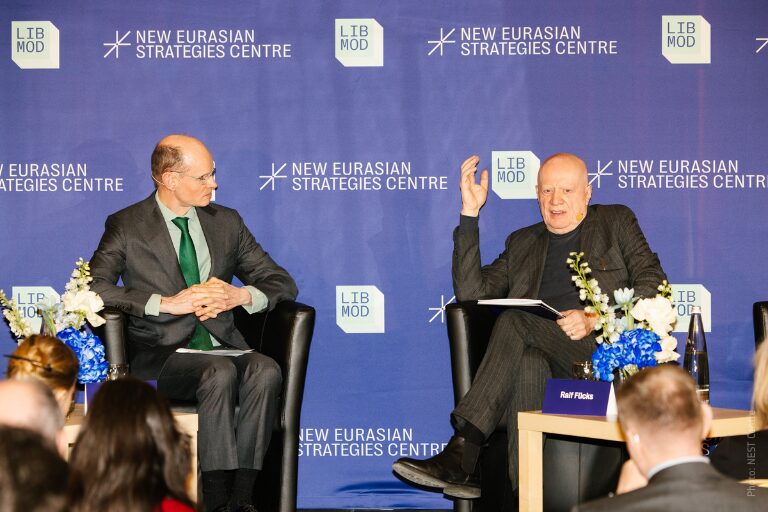
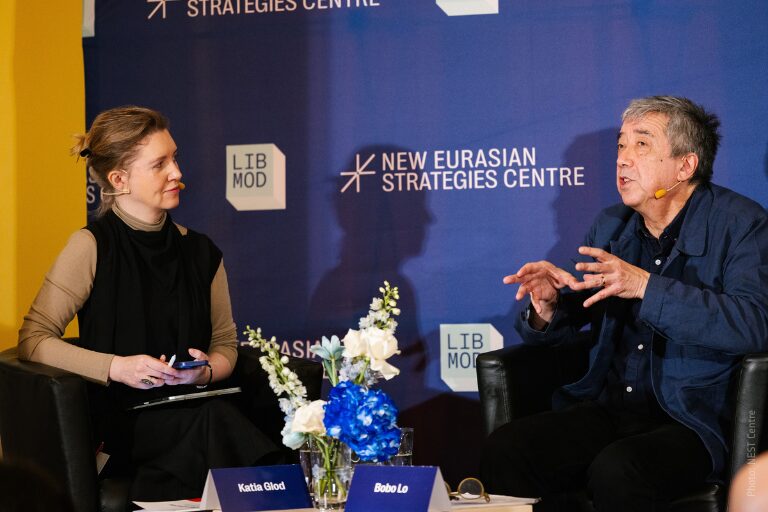
Photos: NEST Centre
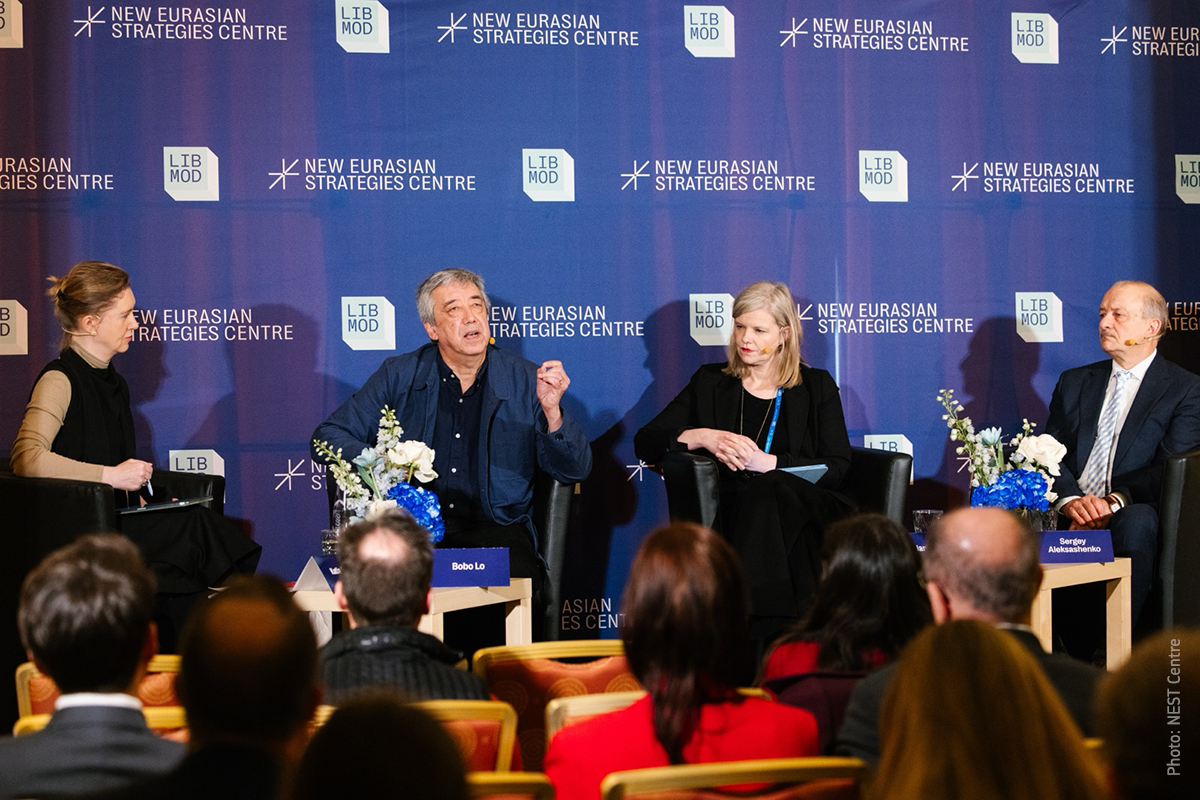
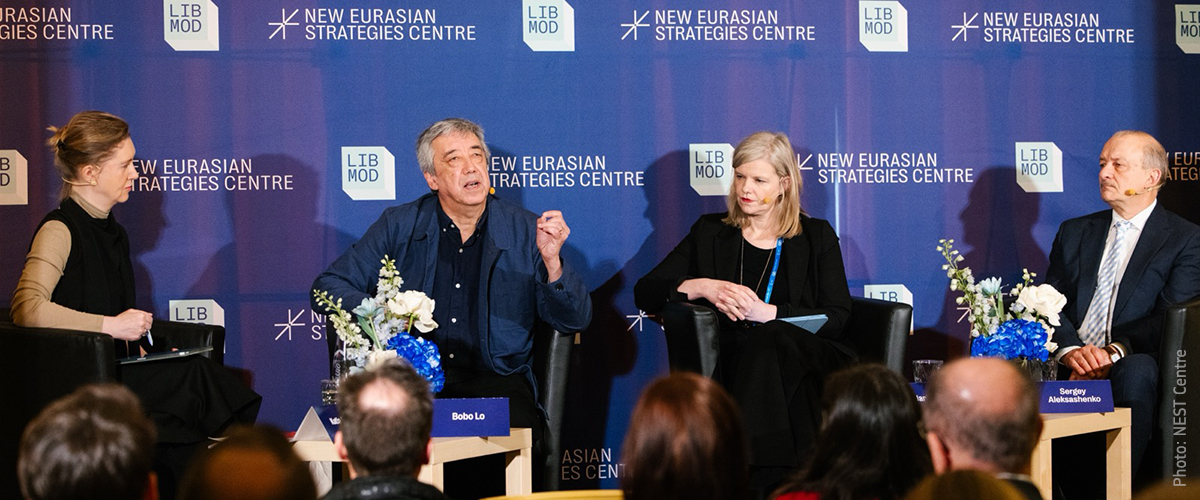
European leaders spent 2025 hastily arranging visits to Beijing to talk to President Xi Jinping. Compared to Donald Trump, the Chinese strongman suddenly looked more reasonable and balanced to them. This is a mistake, Janka Oertel of the European Council on Foreign Relations, told an audience of experts and journalists in Munich during an event organised jointly by the Berlin-based Center of Liberal Modernity and the London-based New Eurasian Strategies Centre (NEST) on the sidelines of the annual Munich Security Conference.
In Oertel’s view, China’s long-term policy vis-à-vis Europe is and will remain hostile. The regime in Beijing does not like European liberal values and sees the Europeans as potential global competitors. If there is any country that Beijing sees eye to eye with, it is Vladimir Putin’s Russia. Shunned and sanctioned by the West after the full-scale invasion of Ukraine in 2022, strapped for money to continue waging the war, it has only one reliable partner – China. Or does it?
This question and others are tackled in the NEST report “Marriage Without Love: The China-Russia Partnership and What It Means for the World”, which was presented in Munich by two of its authors – Australian scholar Bobo Lo and the US-based Russian economist Sergei Aleksashenko.
The report tries to dispel the popular notion of the Moscow-Beijing alliance as a chiefly ideologically motivated anti-Western block. The authors see key differences in Russia’s and China’s approaches to global affairs: Xi’s regime seeks to establish a bipolar world dominated by China and the United States, in which China maintains its leading position in the global economy. Putin, meanwhile, seeks a world in which Russia plays the role of the number two superpower and, from the Kremlin’s perspective, has de facto veto power on matters affecting its national interests – as formulated by the regime in Moscow. “It is true that neither Putin nor Xi are fans of liberal democracy, said Bobo Lo. But in the long term, the two countries have different strategic goals.”
Both countries are cooperating, mostly, as the report’s authors point out, because their economic systems complement each other. “Russia has raw materials, while China has an industrial base that requires them, especially oil”, noted Sergei Aleksashenko. However, in his opinion, this cooperation has almost reached its peak and is unlikely to expand significantly. It is also too dependent on fluctuations in global hydrocarbon prices.
Why China does not invest much in Russia
Aleksashenko, who was a deputy head of Russia’s Central bank in the late 1990s, pointed to another contradiction in the Russia-China relationship: despite Moscow’s wishes and loud joint statements about strategic partnership, Chinese investment in Russian industry remains low. “Beijing doesn’t see the value in investing in the development of a potential competitor”, he explained. Although China still needs some Russian technologies, primarily for its aerospace industry, this dependence is significantly diminished, compared even to 10 – 15 years ago.
Oertel is convinced that one thing should be important to Europeans (and Americans): today’s China-Russia partnership is real and directly impacts the course of Russian aggression against Ukraine. “The reasons and prospects for this partnership are not so important now,” Oertel said. Moreover, “any attempts by the Europeans to convince Beijing that helping Moscow is not in its interests, are simply naive.” A rejection of Western democracy, while not being the primary reason, is still an important political reason for the two regimes’ cooperation, she believes. Oertel insisted that instead of vying for Xi’s favours, Europeans could “punish” China for its assistance to Putin by imposing tariffs on Chinese goods in a number of sectors.
This is unlikely to happen. However, the idea of expanding contacts with the Global South as a counterweight to China and Russia was repeatedly voiced during this year’s Munich conference. Even Trump’s opponents have noted that if his agreements with India to reduce purchases of Russian oil bear fruit, this will become a significant factor in exerting pressure on the Russian regime.
Blundering Europe is begging Beijing for attention
LibMod-founder Ralf Fücks said that Europe’s ability to influence both Russia and China would have been much stronger had it focused attention on developing its capacity in three sectors – IT, AI and aerospace. “We lack dynamism and innovation”, said Fücks and added that as a result, Europeans are reduced to “begging Beijing for attention against the backdrop of Trump’s policies” despite the fact that Europe now provides the bulk of economic and military aid to Ukraine.
Why Beijing wants Russia neither to win nor to lose
Asked which outcome of the war with Ukraine Beijing wants for Russia, Bobo Lo replied that China wants Moscow to neither win or lose: A Russian defeat could lead to the arrival in the Kremlin of a leadership willing to make significant concessions to the West, while a Russian victory could significantly reduce Russia’s dependence on China, which has developed over the years, and changed the political relationship between them.
However, Lo added, “if you have more than 4,000 kilometers of common border, as the two countries do, then some kind of cooperation is inevitable – no matter what regimes may eventually come to power in both capitals.”

Hat Ihnen dieser Artikel gefallen? Wenn ja, können Sie die unabhängige redaktionelle Arbeit und den Journalismus von LibMod über ein einfaches Spendentool unterstützen.
Spenden über PayPal

Wir sind als gemeinnützige Organisation anerkannt, dementsprechend sind Spenden steuerlich absetzbar. Für eine Spendenbescheinigung (ab einem Betrag von 200 EUR erforderlich) senden Sie bitte Ihre Adressdaten an finanzen@libmod.de