
Armenia After the 2026 Parliamentary Elections: Russia’s Setback and the Prospects for Armenia’s European Path
The 2026 parliamentary election has granted Prime Minister Nikol Pashinyan a renewed mandate while also highlighting the limits of Russian influence in Armenia. Nevertheless, pro-Russian forces remain a significant political factor and are likely to continue slowing reforms and the country’s rapprochement with the EU. Areg Kochinyan, President of the Armenian Council, analyzes the election results, Russia’s remaining levers of influence, and the prospects for Armenia’s European path.
Executive summary
The results of Armenia’s parliamentary elections of June 2026 renewed the mandate of Prime Minister Nikol Pashinyan’s Civil Contract party, giving it a qualified parliamentary majority. At the same time, the elections made it clear that pro-Russian political forces remain a significant factor in Armenian politics despite their inability to secure power.
The outcome is a strategic setback for the Kremlin. Russian-backed political forces in Armenia failed to translate Moscow’s extensive political, informational, and economic support into electoral victory. Nevertheless, Moscow is still able to wield substantial influence through its political allies, media networks, economic actors, and broader societal connections.
Thus, the coming parliamentary term is likely to be characterized not by a direct challenge to the government’s authority but rather by attempts to obstruct reforms, to slow both the peace process with Azerbaijan and the intensification of Armenia’s engagement with Europe, and to preserve Russian leverage over Armenia’s domestic and foreign policy decisions.
The elections: a renewed mandate for Civil Contract
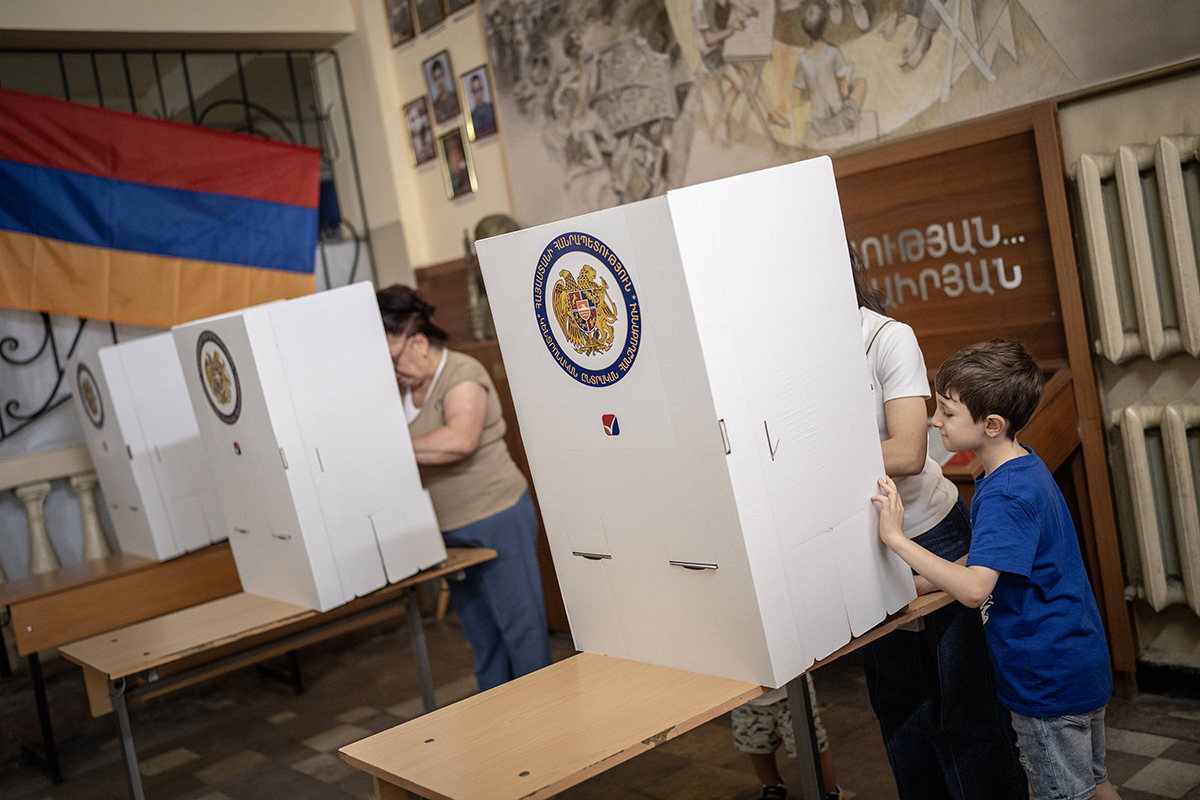
After a week of recounts, Armenia’s Central Electoral Commission (CEC) officially certified the results: Civil Contract secured 64 seats in the National Assembly, Armenia’s parliament, enough to form the next government. The Strong Armenia alliance, led by Samvel Karapetyan, obtained 29 seats, while Robert Kocharyan’s Armenia Alliance won 12 seats. The Prosperous Armenia Party is not represented in the National Assembly, having fallen just short of the electoral threshold.
The exclusion of Prosperous Armenia remains politically controversial. Several opposition forces have alleged serious electoral violations and signaled their intention to challenge the results before the Constitutional Court. However, it is worth noting that neither domestic nor international election observation missions reported violations on a scale that would call into question the overall integrity of the electoral process or the legitimacy of the results. Consequently, the likelihood of an annulment of the election results appears to be limited at this point, although legal challenges may generate political debate and prolong post-election tensions.
The possibility of Constitutional Court proceedings should not be dismissed entirely, though. Should the Court determine that the decisions to annul the results from three polling stations without holding a new vote violated electoral rights or materially affected the distribution of parliamentary seats, it could, theoretically, annul the election entirely and order a new round of voting to be held. Though unlikely, such a scenario cannot be ruled out completely.
Paradoxically, new elections would not necessarily benefit the opposition. The allegations of widespread vote buying and other forms of electoral malpractice have been directed primarily at opposition forces rather than the ruling party. Hence, it is likely that a significant segment of Armenian civil society and many pro-democracy actors would support stricter enforcement measures and greater scrutiny in a new election campaign, potentially constraining some of the methods that opposition parties allegedly relied on during the recent vote.
The final distribution of seats has important institutional consequences. Armenia’s constitutional framework effectively distinguishes between three types of parliamentary majority. A simple majority is sufficient to form a government, adopt the state budget, and pass ordinary legislation. A qualified three-fifths majority enables the National Assembly to appoint a number of senior state officials and amend “constitutional laws” – laws of significant importance in the Armenian legal code that are higher in the hierarchy than ordinary laws but bellow constitution regulating key institutions and political processes. A constitutional two-thirds majority is required to initiate constitutional amendments and launch a referendum on the adoption of a new constitution.
With 64 seats, Civil Contract has a qualified majority but falls short of the constitutional threshold. This means the government can exercise considerable institutional influence, including through appointments to key state bodies and amendments to constitutional laws. It lacks the parliamentary strength necessary to unilaterally initiate constitutional reform, however. Given the deep geopolitical and ideological divisions between the government and the opposition, it appears highly unlikely that the government will be able to secure cross-party support for constitutional change in the foreseeable future. The composition of the new parliament reflects the persistence of deep geopolitical divisions within Armenian politics. The governing party and the parliamentary opposition differ fundamentally in terms of their strategic visions for the country. While Civil Contract continues to advocate the diversification of Armenia’s foreign relations, continuation of the peace and normalization process with Azerbaijan and Turkey and deeper cooperation with Western partners, the opposition is expected to favor closer alignment with Russia and to challenge many aspects of the government’s foreign policy agenda.
A strategic defeat for Russia
The election results represent a significant political disappointment for Moscow. Since the deterioration of Armenian–Russian relations following Russia’s failure to behave as Armenia’s ally in connection with Azerbaijan’s 2022–2023 military invasion of Armenian territory and subsequent regional developments, the Kremlin has invested considerable political resources to support forces opposed to Pashinyan’s government.
The elections demonstrated the limits of this strategy. Pro-Russian forces failed to secure a parliamentary majority or form a government despite extensive political backing, favorable media coverage and attacks by Russian state and affiliated media outlets, the mobilization of influential economic actors with ties to Russia and even direct trade wars and hybrid attacks.
This outcome suggests that stoking anti-government sentiment alone is not sufficient to guarantee the electoral success of parties associated with Moscow. It appears that a significant portion of Armenian society is growing increasingly skeptical of Russia’s role in regional security and increasingly supportive of efforts to diversify Armenia’s international partnerships.
However, interpreting the election results as signaling the end of Russian influence in Armenia would be premature. While Moscow failed to achieve a political breakthrough, it can still wield substantial leverage through parliamentary allies, economic networks, the media, and longstanding institutional connections.
Consequently, the elections should be viewed not as the conclusion of geopolitical competition in Armenia but as the beginning of a new phase of that competition, one in which influence is likely to be exercised through indirect and non-electoral means. This new phase definitely does mark the end of the Russian dominance in the Armenian political landscape, though.
The parliamentary opposition and Russia’s remaining levers of influence
The new parliament will include two opposition blocs that are widely perceived as Russian proxies whose primary focus will be on opposing the government’s efforts to reduce the country’s dependence on Moscow.
Although Samvel Karapetyan and Robert Kocharyan are not expected to serve in the National Assembly themselves, each of their political blocs will continue to be represented through other members of their electoral lists. Together, these parties possess sufficient parliamentary strength to shape political debates, challenge government initiatives, contribute to political polarization and, most importantly, block the referendum on the adoption of a new constitution.
The opposition’s influence extends beyond parliament. Many leading opposition figures have close ties with business networks linked to Russia, while pro-Russian narratives continue to enjoy significant visibility on traditional and social media platforms. There are a variety of political, economic, and social actors who are still invested in preserving Armenia’s traditional dependence on Russia and are likely to resist policies aimed at accelerating integration with European institutions.
Thus, the opposition’s role in the coming years is likely to extend beyond conventional parliamentary competition. It may increasingly function as one of many vehicles through which Russian interests seek to influence domestic political debates and limit the government’s room for maneuver.
Scenarios of political destabilization
The elections have left pro-Russian forces with a strategic dilemma. They can accept the outcome and operate within parliament, they can mount a legal challenge to the results, or they can attempt to mobilize public pressure against the government.
The most likely scenario is one of parliamentary obstruction. Opposition forces are expected to use legislative procedures, public campaigns, and institutional mechanisms to slow reforms, challenge government initiatives, and increase political polarization. Efforts of this nature may be particularly visible in debates on foreign policy, security, and relations with the European Union. This involves intensified hybrid pressure. Russian influence operations in Armenia have historically relied not only on political parties but also on media campaigns, disinformation, economic leverage, and the amplification of social grievances. These tools may become increasingly important as Moscow seeks to compensate for its electoral defeat.
A second scenario involves attempts at street mobilization. However, this appears less likely. Previous efforts by pro-Russian forces to generate sustained anti-government protests have failed to attract sufficient public support. Even the major mobilization campaigns conducted during recent years were unable to fundamentally alter Armenia’s political trajectory. While localized protests remain possible, a large-scale movement capable of threatening the government’s position currently appears unlikely.
Implications for Armenia’s European path
The implications of the election results for Armenia’s relations with the European Union appear to be mixed.
On the one hand, the renewed mandate obtained by Civil Contract grants legitimacy to the government’s continuing pursuit of closer cooperation with European institutions. The elections demonstrated that a substantial segment of Armenian society supports policies aimed at diversifying the country’s foreign relations and reducing dependence on Russia.
On the other hand, the greater parliamentary representation of pro-Russian forces is likely to increase political resistance to reforms associated with Armenia’s European agenda. Opposition parties can be expected to challenge initiatives related to governance reform, institutional modernization, foreign policy diversification, and deeper cooperation with the EU.
Moreover, Russia’s failure to secure a political victory is unlikely to result in a reduction of its efforts to preserve its influence in Armenia. On the contrary, the Kremlin may increasingly rely on its parliamentary allies, media networks, economic actors, and information campaigns to slow Armenia’s gradual reorientation toward Europe and maintain leverage over key policy decisions.
Nevertheless, the election results will not fundamentally alter Armenia’s broader foreign policy trajectory. While domestic political resistance is likely to intensify, the government retains sufficient political authority to continue expanding the scope of its cooperation with European partners. Its principal challenge will not be defining Armenia’s strategic direction but staying that course in the face of growing political and external pressure.
Outlook
The 2026 parliamentary elections strengthened the political position of Nikol Pashinyan’s government while confirming Russia’s continuing influence within Armenia’s political system.
For the Kremlin, the elections represent an important setback but not a strategic defeat. Russia failed to achieve its most ambitious aim of preventing the re-election of a government committed to reducing Armenia’s dependence on Moscow and expanding cooperation with Europe. Nonetheless, Russia did achieve its minimum goal of securing more than a third of the parliamentary seats and preserving its network of political, economic, and informational actors capable of influencing domestic developments.
There is thus little prospect of an immediate political reversal in Armenia during the coming parliamentary term. Rather, the principal challenge will be the ability of state institutions to withstand sustained pressure, resist destabilization efforts, and continue implementing reforms in an increasingly contested political environment.
The competition between Armenia’s European aspirations and Russia’s efforts to preserve its influence has entered a new phase. The outcome of this competition will shape not only Armenia’s domestic political development but also the future geopolitical balance in the South Caucasus.

Hat Ihnen unser Beitrag gefallen? Dann spenden Sie doch einfach und bequem über unser Spendentool. Sie unterstützen damit die publizistische Arbeit von LibMod.
Wir sind als gemeinnützig anerkannt, entsprechend sind Spenden steuerlich absetzbar. Für eine Spendenbescheinigung (nötig bei einem Betrag über 200 EUR), senden Sie Ihre Adressdaten bitte an finanzen@libmod.de