
Unequal friends: The deepening Sino-Russian partnership – implications and limitations
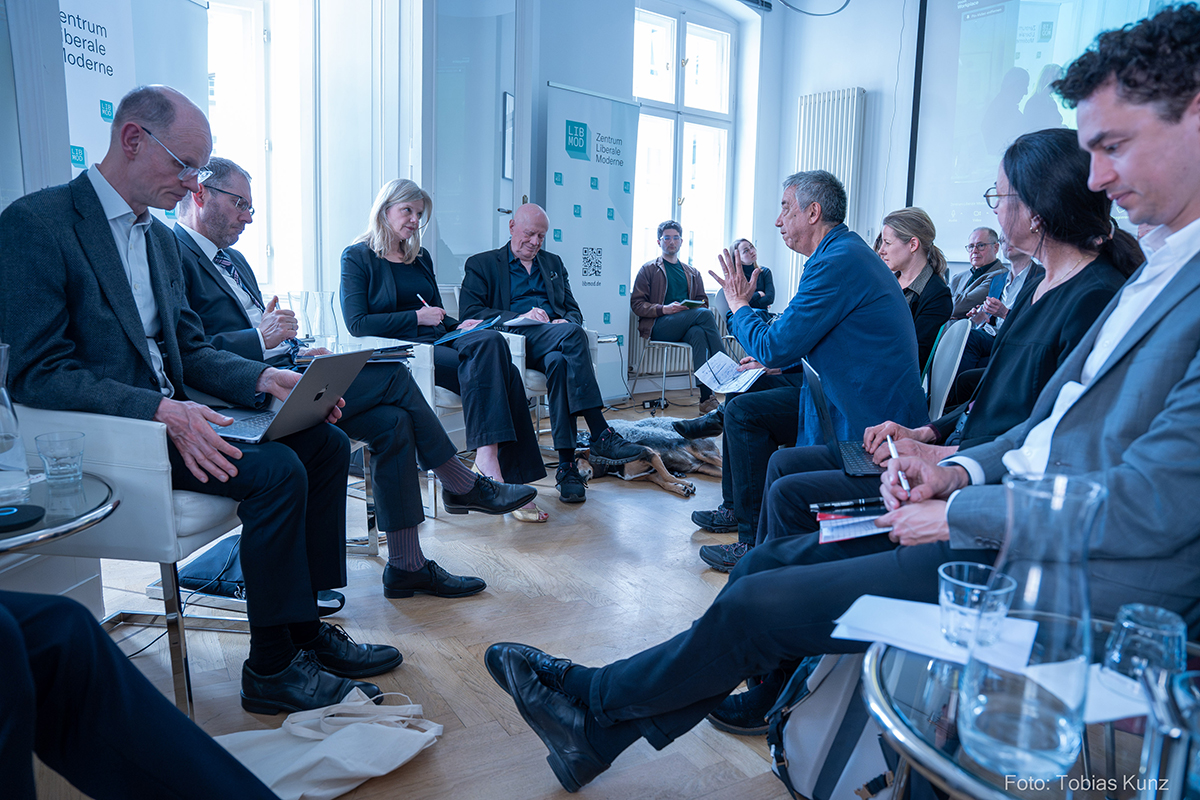
At a recent expert roundtable held in Berlin with our partners from the New Eurasian Strategy Center, we discussed the deepening ties between Russia and China, their asymmetric nature and Moscow’s increasingly subordinate position. Our Russia Programme Director Maria Sannikova-Franck summarizes the key findings.


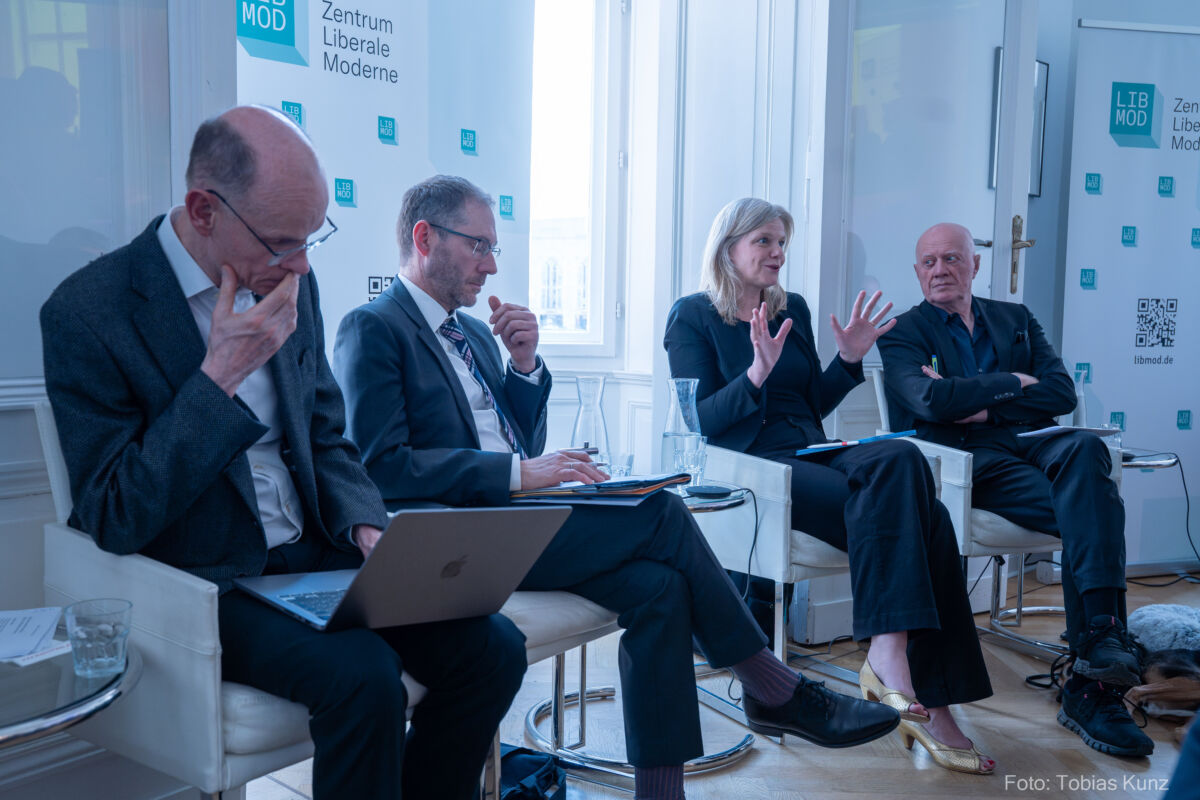
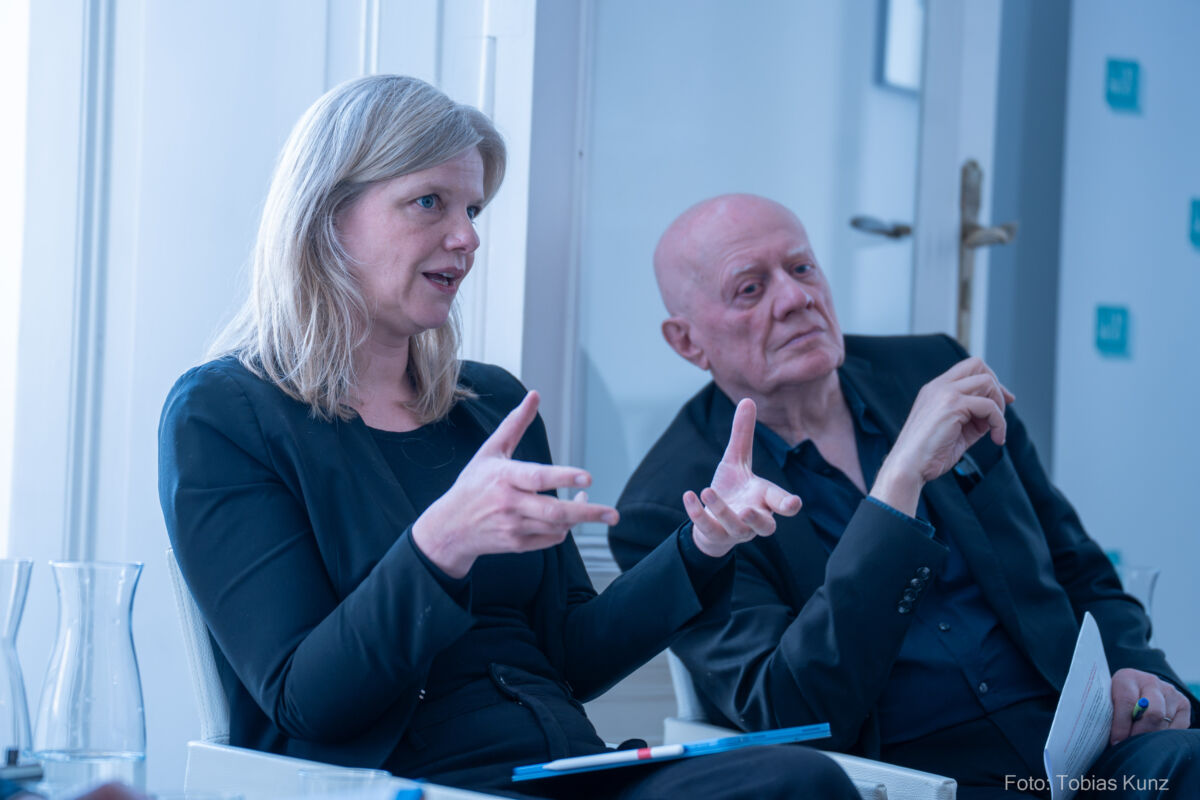
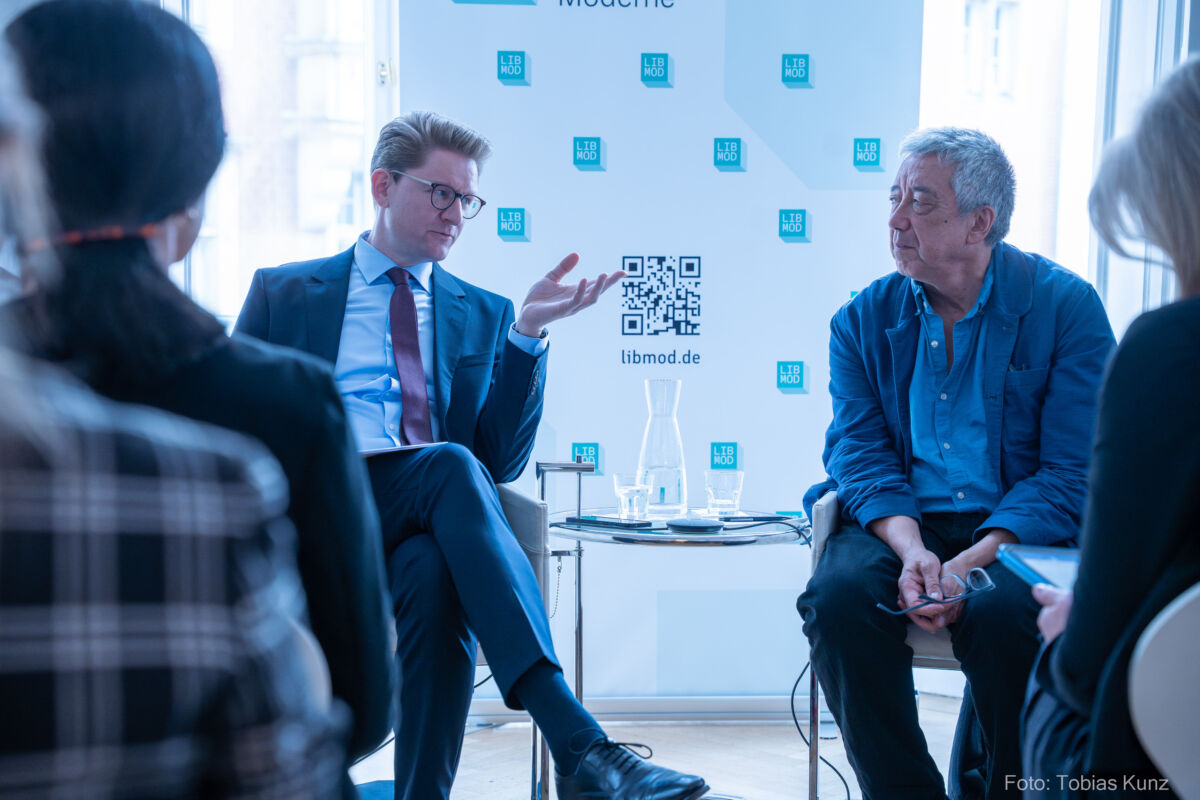
Photos: Tobias Kunz, Libmod
The first part of the discussion focused on the character, trajectory and limitations of Sino-Russian relations. The experts agreed that the partnership between Moscow and Beijing is strong, resilient and currently intensifying in many sectors. Both countries share the goal of challenging the Western-dominated liberal international order.
On the other hand, the relationship is deeply asymmetrical with Russia increasingly in subordinate position. China and Russia, united in their ant-western position, do not share a common ideology nor a common vision of the international order in the 21st century. Moreover, their bilateral relations have been shaped by mutual mistrust rooted in historical trauma and cultural distance. This factor remains relevant at least in the medium term, despite the current close alignment between Moscow and Beijing.
Because of this, the relationship is a flexible strategic partnership driven by self-interest and realpolitik. Both sides understand the benefits they derive and are aware that they would be significantly worse off without each other. Yet the partnership also has limitations and potential areas of tension.
Beijing as a source of comfort for the Kremlin
For Moscow, the relationship with Beijing is a source of geopolitical comfort and a force multiplier for Russian influence around the world. Without China, Russia and Putin’s regime would be considerably weaker. Since February 2022 and the imposition of Western economic sanctions, however, China has become indispensable for the Russian economy, providing markets, technology, financial channels and dual use goods that enable the current Russian war effort. There is also much to suggest that China’s support for Russia’s war effort has its limits. Beijing certainly does not want the Kremlin to lose. The question, however, is how much they want Russia to win.
For China, Russia provides a secure strategic rear along their 4,200-kilometre border. This is important in itself, but also because it allows Beijing to focus on more pressing priorities, above all its relationship with the United States. In the broader strategic rivalry with Washington, Russia serves as a useful geopolitical partner. At the same time, Moscow’s acquiescence to Beijing’s ambitions in Northeast and Central Asia, in the Arctic or in global governance is just as important as active cooperation.
The widening power gap between China and Russia raises an increasingly important question for the Kremlin: where should the geopolitical and geo-economic red lines of the relationship be drawn?
Participants stressed that despite their growth, Sino-Russian economic ties have become one-sided and disadvantageous for Moscow: While China exports manufactured goods, Russia provides mainly raw materials.
Beijing has taken advantage of Russian weakness in recent years by purchasing oil and gas at discounted prices, expanding Chinese manufacturing exports and strengthening its position in key sectors of the Russian economy. Moreover, many previously promising and future-oriented forms of technological and industrial cooperation have stagnated or disappeared altogether since the invasion of Ukraine. China maintains a certain distance because the Russian economy has become toxic due to sanctions and Beijing does not like competition from Moscow in industrial manufacturing.
On the other hand, the experts argued that China can exploit Russia’s dependency only so much. If it pushes Putin too far into a corner, this could create instability inside Russia and potentially threaten the survival of the Kremlin regime — a scenario China wants to avoid.
China sees its future in renewables, Russia remains dependent on fossils
Although the energy partnership remains a crucial pillar of bilateral relations and may deepen further in the short term – not least because of instability in the Middle East – the experts argued that its long-term importance is likely to decline. China sees its geo-economic future in renewable energy and technological dominance. Its transition towards a technology-driven, post-carbon economy contrasts sharply with Russia’s growing dependence on fossil fuels, military production and raw material exports. In the long run, China’s economic transformation could therefore pose an existential challenge to Russia’s position and influence in the international system.
Another major factor shaping the relationship is the difference between Chinese and Russian visions of global order. Although both countries seek to challenge US primacy and advocate a “multipolar world order,” the concept of multipolarity means very different things in Moscow and Beijing. The Russian understanding resembles a kind of “Yalta 2.0” based on spheres of influence and bargaining between US, China and Russia.
Xi Jinping appears more receptive to a G2 scenario, because that places China and the United States on the same level. One speaker described China as a “revisionist but not revolutionary power”, which promotes itself as a defender of globalisation and multilateralism, but uses its economic power and influence to consequently undermine liberal values and to fill the vacuum in global governance. Beijing seeks to reshape the international system on the expense of the US and Europe, working within it. And it advocates a regulated international order, which it perceives as a condition for realising the Chinese dream of national renewal.
Russia, by contrast, was portrayed as a power that seeks to tear down the system, as it benefits from geopolitical instability and thrives in situations of crisis and disruption.
Although these differences could, in the long run, pose a challenge to the partnership, participants argued that the China-Russia relationship will remain stable in the medium term. That is why experts have dismissed the idea of a ‘reverse Kissinger’ or ‘reverse Nixon’ as delusional – whereby Washington attempts to improve relations with Russia in order to drive a wedge between Moscow and Beijing. Neither Russia nor China can afford to allow their partnership to unravel, when the alternatives currently offer them so little.
“China is undercutting the very essence of European power”
The second part of the discussion focused on the challenges posed by China to Europe, first and foremost to Germany.
The main assessment of the threat emanating from Beijing’s economic policies was drastic: China is undercutting the very essence of European power, which mainly rests in its huge economic potential. The bloc’s GDP in nominal terms is still bigger than China’s (23 v 20.8 trillion dollars expected for 2026, according to the IMF). But Beijing has more confidence, ambition and willingness to take risk. A stark example of this are the restrictions Beijing imposed on rare earth exports in 2025, which hit the EU hard. Europe is already suffering deindustrialization, with Germany alone losing an estimated 10,000 industry jobs monthly.
Add to this China’s role as the major enabler for Russia’s war of aggression against Ukraine. The brutal war was described by a participant as “incredibly convenient” for Beijing, because China “spends nothing, gains a lot and is happy that its biggest adversaries are burning money every day on military support for Ukraine”, something that does not generate revenue nor wealth.
Europe’s answer has so far been twofold – diplomatic hard talk and economic sanctions. The first measure rests on the assumption that reputational risks matter to Chinese officials, who like to portrait their country as neutral and as a power interested in reaching a productive solution. The second was implemented with the 20th EU sanctions package against Russia in April, which for the first time targets third-country suppliers of dual-use goods or weapons systems to Russia, including banks and companies from China. “Our thinking is that China’s support for Russia’s war is immensely detrimental to our interests,” a policymaker said.
But this might be far from enough. Some argue that Chinese officials really have no problem with reputational risks, when it comes to their relationship with Russia “because they don’t think (the Europeans) matter”. In fact, China has not really paid a price for its support for Russia’s war against Ukraine. Others, however, challenged the notion that Beijing does not care about its reputation. As one participant put it “they are not nice and sweet, but they are less aggressive than few years ago”.
The ensuing debate on sanctions centered on possible costs on the Chinese aviation industry to be imposed via software restrictions for Airbus planes – however the issue is complicated by competition from US giant Boeing and mounting uncertainty about Washington’s stance on the issue.
Criticism was also heaped at the EU trade policy versus China, which turned the bloc into a supplier of “highly replaceable” agricultural and commodity goods like barley, potatoes and even chicken feet, while the Chinese “take on all the industrial sides”.
Europe must challenge China as a bloc
The discussion ended with the firm conclusion that Europe can only challenge China as a bloc and not on national levels. It should aim for a mitigation scenario, in which the EU acts fast (within 6 to 12 months) to protect its industries from the Chinese onslaught, while it keeps supporting Ukraine in its war with Russia.
If this fails, think tankers warn of a scenario (called “adaptation”), in which a Chinese-led global order leads to the EU’s fragmentation and to a greater role for Russia.
Nikolaus von Twickel contributed to this report

Hat Ihnen dieser Artikel gefallen? Wenn ja, können Sie die unabhängige redaktionelle Arbeit und den Journalismus von LibMod über ein einfaches Spendentool unterstützen.
Spenden über PayPal

Wir sind als gemeinnützige Organisation anerkannt, dementsprechend sind Spenden steuerlich absetzbar. Für eine Spendenbescheinigung (ab einem Betrag von 200 EUR erforderlich) senden Sie bitte Ihre Adressdaten an finanzen@libmod.de