
Programme “Russia and the West” 2026
Center for Liberal Modernity – Russia Programme
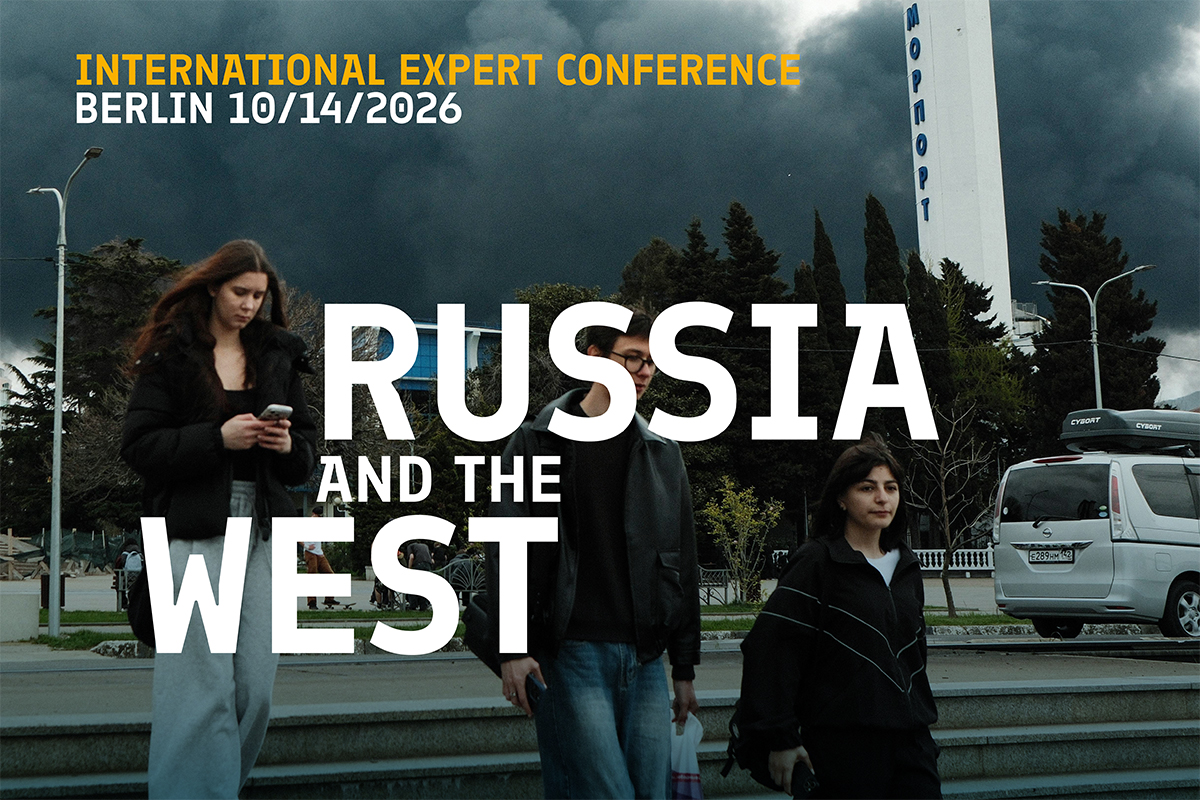
Expert Conference* and Public Evening Discussion
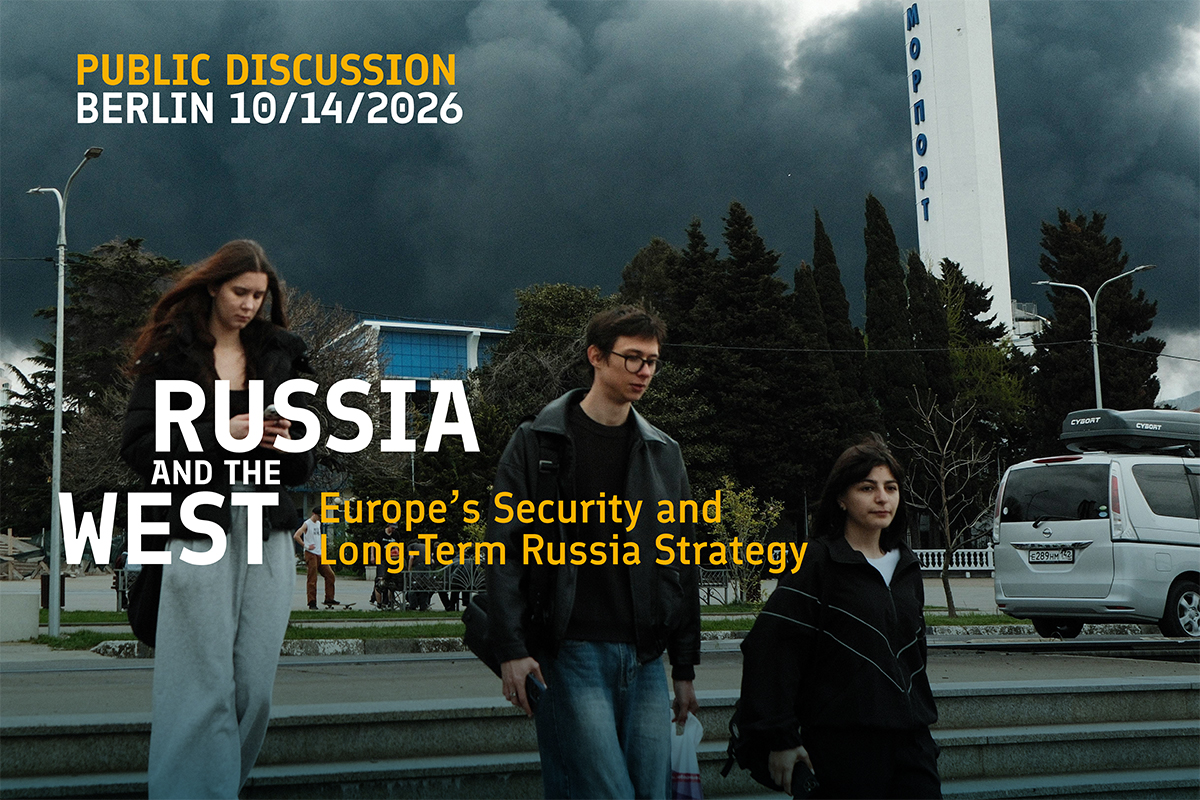
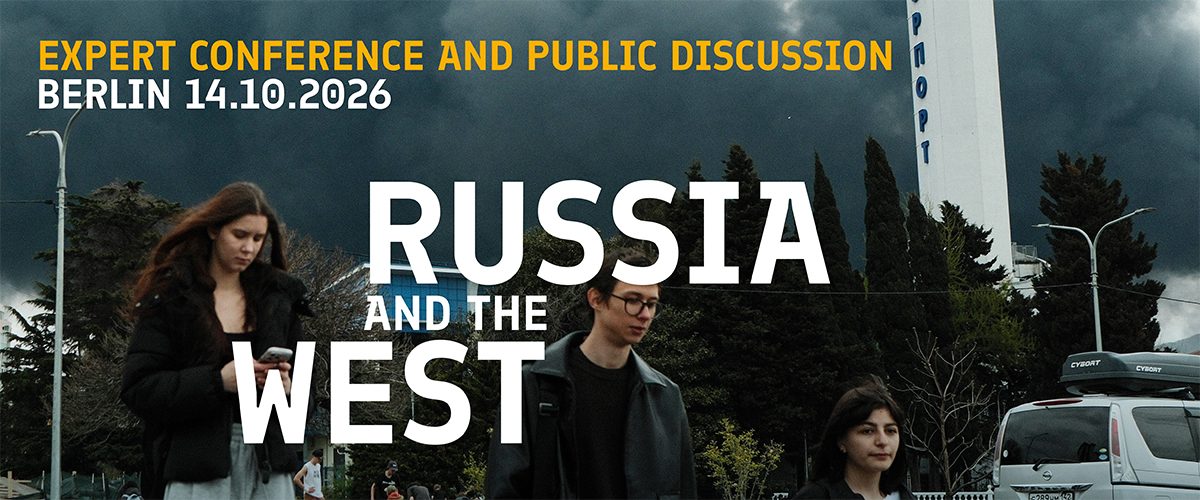
RUSSIA AND THE WEST
Prospects for ending the war, Russia’s domestic dynamics and Europe’s strategy for a post-war Russia
14 October 2026 (Wednesday)
Reinhardtstraßenhöfe, Reinhardtstraße 14, 10117 Berlin & Online
Please note that registration is possible upon invitation only.
With Russia’s full-scale aggression against Ukraine approaching its sixth year, the Kremlin finds itself in an increasingly challenging situation, both on the battlefield and at home.
The Russian army’s advances in south-east Ukraine have slowed sharply over the past year. Moscow is trying to compensate for this lack of success by intensifying drone and missile strikes on Ukraine’s cities and infrastructure and hybrid attacks against Ukraine’s allies. The lack of missile defence leaves Ukraine increasingly vulnerable to Russian bombardment. The country is facing an extremely harsh winter. At the same time, Kyiv is conducting mid- and long-range counterstrikes against energy infrastructure, economic and military targets across Russia. The war has finally come home to Russia.
While Putin has managed to preserve domestic stability so far and engineered a constitutional majority for the ruling United Russia party at the recent tightly orchestrated Duma elections, he is facing increasingly negative economic trends. Large sections of the population can no longer ignore the impact of the war. Although there is no indication that regime collapse is imminent or likely, intra-elite tensions are becoming more visible. Ultranationalist hardliners are calling for a more aggressive war strategy, tougher domestic repression, and open confrontation with the West. Voices within the establishment express doubts that the war can be won. Yabloko’s exclusion from the Duma elections showed that the Kremlin fears growing war weariness.
The conference will focus on these questions:
- What can German/European policymakers do to force Russia to stop the war?
- How can we counter the escalation of Russia’s bombing campaign? How can we help Ukraine survive the winter and defend itself successfully?
*) The expert conference is held in cooperation with and with support from the New Eurasian Strategies Centre (NEST), London

EXPERT CONFERENCE
09:30 Registration and Coffee
10:00–10:15
- Welcome: Marieluise Beck, Center for Liberal Modernity
- Opening: Ralf Fücks, Center for Liberal Modernity
10:15–11:30 Session One
Russia at War: Military Pressure, Economic Strain, Regime Stability
Inputs:
- Alexander Kolyandr, Europe Director, Eurasia Group; Senior Fellow, Center for European Policy Analysis (CEPA)
- Ksenia Luchenko, Research Fellow, NEST Centre
- Nikolai Petrov, Head of Analysis of Transformation Process, NEST Centre
Comment: Margarete Klein, Senior Fellow for Eastern Europe and Eurasia, German Institute for International & Security Affairs (SWP)
Moderation: John Lough, Head of Foreign Policy, NEST Centre
11:30–12:00 Coffee Break
12:00–13:30 Session Two
How to End the War in Ukraine and Minimize the Threat from Russia: Europe’s Leverage
Inputs:
- Agnieszka Legucka, Deputy Director of the Strategy Department, Ministry of Foreign Affairs of Poland
- Marie Mendras, Professor, Paris School of International Affairs – SciencesPo, Paris
- Dominik Mutter, Political Director at the German Federal Foreign Office
- Oleksandr Sushko, Executive Director, International Renaissance Foundation, Kyiv
Comment: Simon Schlegel, Programme Director Ukraine, Center for Liberal Modernity
Moderation: Maria Sannikova-Franck, Programme Director Russia, Center for Liberal Modernity
13:30–14:30 Lunch Break
14:30–16:00 Session Three
Russia’s Future, Europe’s Security and Long-Term Russia Strategy
Inputs:
- Maria Domańska, Senior Fellow and Deputy Head of the Russian Department, Centre for Eastern Studies (OSW), Warsaw
- Mikhail Khodorkovsky, co-founder of the Russian Anti-War Committee
- Nico Lange, Senior Fellow, Transatlantic Defense and Security, Center for European Policy Analysis (CEPA); Senior Advisor, Rasmussen Global
- Fredrik Löjdquist, Director of the Stockholm Centre for Eastern European Studies (SCEEUS)
Moderation: Ralf Fücks, Center for Liberal Modernity
16:00 Closing Remarks
PUBLIC DISCUSSION 19:00–21:30
Europe’s Security and Long-Term Russia Strategy
19:00 – 19:10 Welcome: Ralf Fücks, Center for Liberal Modernity
Panel I:
- Deborah Düring, Member of Parliament, Foreign Policy Spokesperson of the Green Party Group
- Jürgen Hardt, Member of Parliament, Foreign Policy Spokesperson for the CDU/CSU parliamentary group
- Nils Schmid, Member of Parliament, Parliamentary State Secretary at the Defence Ministry
Comment: Mikhail Khodorkovsky, Co-Founder of the Russian Anti-War Committee
Moderation: Ralf Fücks, Center for Liberal Modernity
Panel II:
- Agnieszka Legucka, Deputy Director of the Strategy Department, Ministry of Foreign Affairs of Poland
- Fredrik Löjdquist, Director of the Stockholm Centre for Eastern European Studies (SCEEUS)
- Marie Mendras, Professor, Paris School of International Affairs – SciencesPo, Paris
- Žygimantas Pavilionis, Member of the Lithuanian Seimas, Deputy Chairman of the Foreign Affairs Committee
Moderation: Maria Sannikova-Franck, Center for Liberal Modernity
21:30 – 22:30 Reception