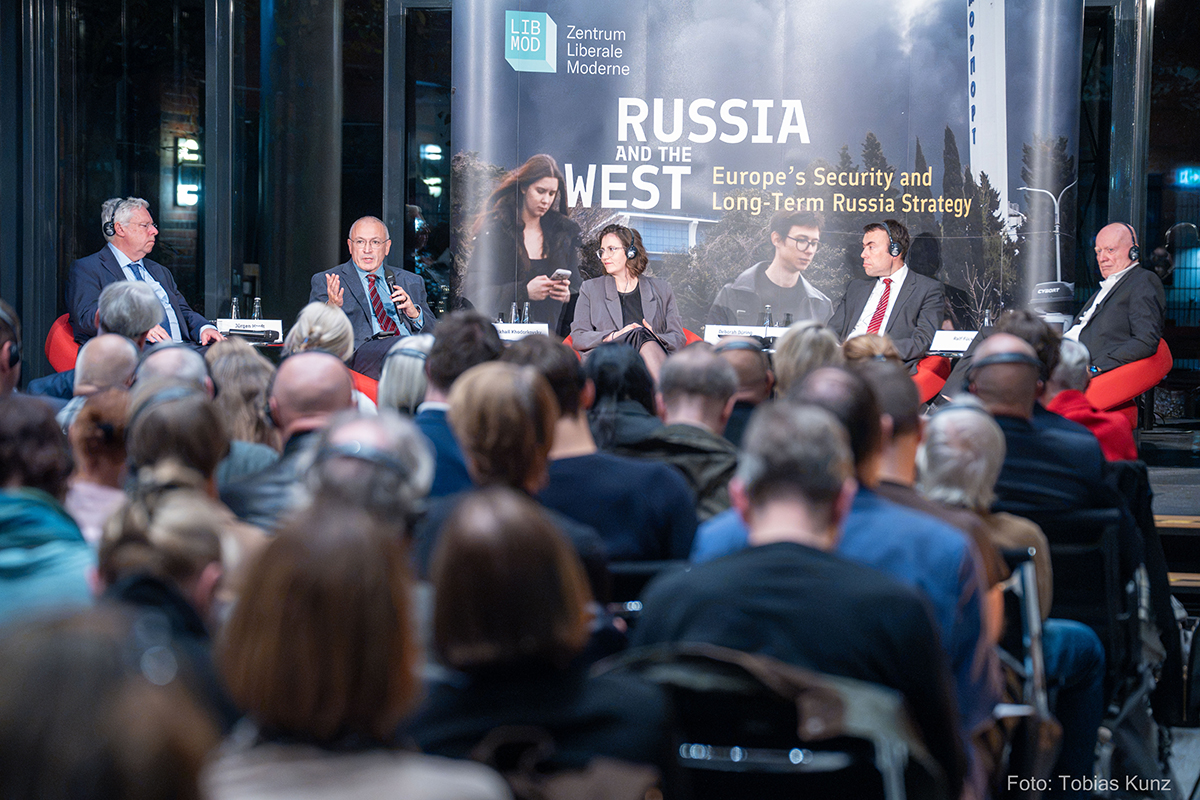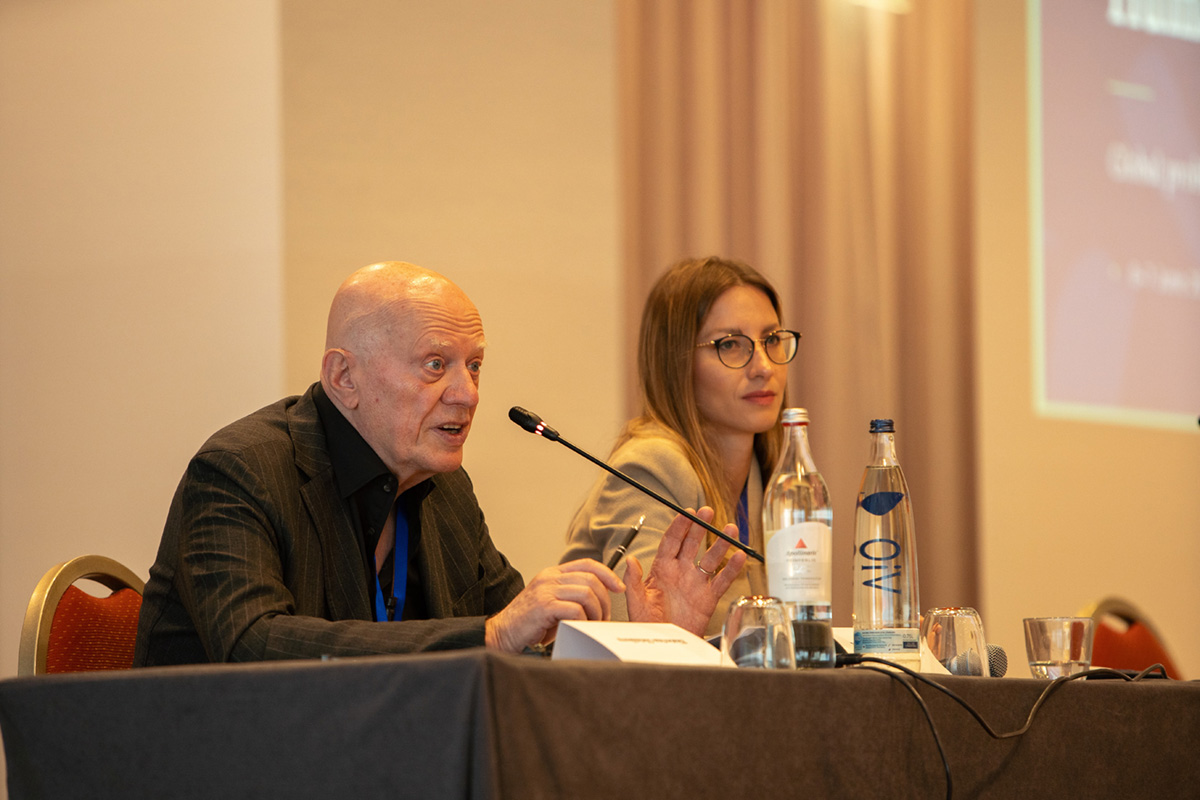

Human rights then and now — Keynote speech at the 2026 Juri Schmidt Conference
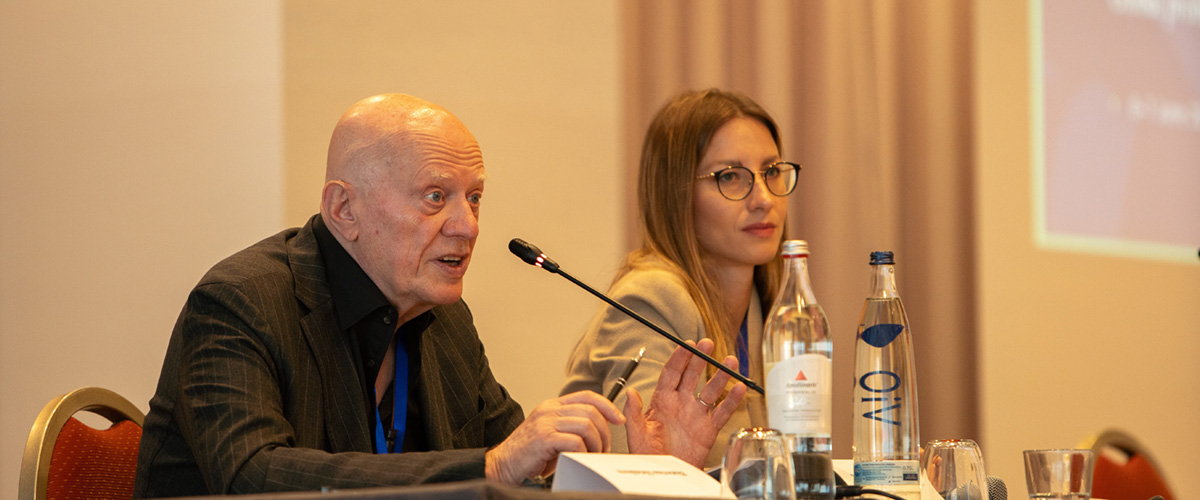
Ralf Fücks and conference organiser Anastasia Burakova.
In memory of the Russian human rights lawyer Yuri Schmidt, an annual conference has been held in Berlin since 2017. This year, LibMod founding director Ralf Fücks delivered the keynote speech, in which he warned that authoritarian regimes are on the rise and that anti-liberal sentiments are growing even in democracies. He called on human rights defenders to unite across borders.
It is an honor for me to open this year’s Juri Schmidt Conference. I had the privilege of getting to know Juri Markovich personally. He was a kind man, wise and modest, a courageous advocate of human rights as an expression and guarantor of human dignity.
During the Soviet era, Yuri defended dissidents and civil rights activists. He viewed the collapse of the Soviet Union as a historical gift. But he was aware that this did not mean the fight for the rule of law and democracy had been won—rather, it had only begun.
We first met him when he was coordinating the defense of Mikhail Khodorkovsky after Mikhail had been arrested and charged as an opponent of Putin.
What would Juri Markovich say today, now that the beginnings of democracy in Russia have been completely trampled and replaced by a new authoritarian regime? Well, I suppose he would do what he always did: defend those who stand up for human rights.
If I may, I would like to briefly outline the very concept of human rights in honor of Yuri Markovich. It is built on the belief that all individuals inherently possess fundamental rights and freedoms by virtue of being human. This idea has evolved over thousands of years.
Ancient civilizations, such as the Babylonian Code of Hammurabi, the Athenian democracy, and Roman natural law, already recognized certain rights and responsibilities, laying early groundwork.
Various religious philosophies emphasized the dignity of human beings. This fundamental idea is based on the belief that all people are children of God and therefore incorporate something divine. Strictly speaking, anyone who despises and mistreats other humans is committing blasphemy
The 17th and 18th centuries saw the rise of Enlightenment. Thinkers like John Locke argued for indispensable natural rights, equality before the law and the concept of citizenship. These ideas fueled the American Revolution (1776) and the French Revolution (1789), which emphasized individual liberties.
The first codified set of fundamental rights was the famous British Magna Carta in 1215, which stated limitations on royal power and emphasized legal rights.
In 1776, the American Declaration of Independence asserted the rights to life, liberty, and the pursuit of happiness.
It was followed by The Declaration of the Rights of Man and of the Citizen, adopted during the French Revolution in 1789. It is still the fundamental document that outlines core principles of human rights and civil liberties. Let’s briefly recall them:
- Human Rights are universal: The declaration asserts that all men are born free and equal in rights, emphasizing that these rights are inherent and universal.
- The concept of Natural Rights: It recognizes certain indispensable rights, such as liberty, property, security, and resistance to oppression, as fundamental to human dignity.
- Sovereignty of the People: The declaration establishes that the source of all political power resides in the people, asserting their right to govern themselves.
- Equality Before the Law: It states that all citizens are entitled to equal protection under the law and must be treated equally, without discrimination.
- Freedom of Thought and Expression: The declaration affirms the rights to freedom of speech, religion, and the press, underlining the importance of individual liberties.
- The Right to a Fair Trial: It emphasizes the right to a fair trial and due process, ensuring that justice is administered fairly and impartially.
- The principle of Public Accountability: The declaration stipulates that public officials are accountable to the citizens and must act in accordance with the general will.
- The Basic Right to Property: It recognizes property as a natural right, stating that property is an inviolable and sacred right.
- The Right of Resistance to Oppression: The declaration endorses the right of citizens to resist oppression and tyranny, affirming the importance of individual agency in the face of injustice.
- And finally the principle of Legislative Authority: It states that laws must express the general will and that all citizens have the right to participate in the legislative process either personally or through representatives.These principles laid the groundwork for the modern concept of individual as well as collective human rights.
In the 19th and 20th Century the abolition of slavery, the women’s struggle for equality and the workers movement expanded the scope of equal rights to those who previously had been excluded.
The aftermath of World War II prompted the global recognition of human rights, at least on paper. They were enshrined in the Universal Declaration of Human Rights, adopted in 1948 by the newly established United Nations. This landmark document outlines rights and freedoms applicable to all people, emphasizing dignity, equality, and the principle of non-discrimination.
In 1966, the declaration was extended by the Covenants on Civil and Political Rights & Economic, Social, and Cultural Rights, detailing obligations of states in fulfilling these rights.
Since then, the concept of human rights continues to evolve, with movements addressing issues like racial equality, gender rights, LGBTQ rights, and the rights of indigenous peoples.
Human rights are not a static set of rules; they continue to evolve under the influence of new cultural, social, and political ideas and movements.
That is the success story. But we all know that democratic progress has never been a linear process. Historically, there have been severe setbacks, repeated periods of repression, and there have always been conflicting trends.
The enforcement of international law ultimately depends on the good or bad will of states. This also applies to efforts to establish transnational jurisdiction, which, too, relies on the willingness of nation-states to cooperate. Although human rights are formally recognized by almost all states, authoritarian powers interpret them in a way that effectively perverts them.
Today, we are once again facing an era of anti-liberal trends. Globally, the number of stable democracies is declining. Authoritarian regimes are on the rise. China is emerging as a new world power. Dark times prevail in Russia, exacerbated by the brutal war of aggression against Ukraine, an endless stream of all kinds of human rights violations: Massacres of civilians, torture, the abduction of children, the targeted bombing of residential areas, and the systematic destruction of Ukraine’s livelihoods.
At the same time, the Iranian regime has massacred tens of thousands of people who took to the streets to demand freedom and human rights. In many places, violence against civilians, torture and forced displacement are once again widespread practices.
Even In many democratic countries, anti-liberal sentiments are on the rise. Under President Trump, the U.S. is turning against the liberal order it has defended for so long. Democratic parties and institutions are losing public trust. New digital media have become sources of disinformation and political radicalization.
Global refugee movements are increasing, while at the same time the rights of refugees are being increasingly restricted. We can observe this in Germany as well. Politically persecuted men and women face increasing difficulty in finding a safe haven. And even those already living in exile are threatened by the long arm of the Kremlin and other authoritarian regimes.
All these trends make this conference even more important. Human rights defenders must unite across borders. This applies to civil society as well as to democratic governments. We have to build a global alliance of democracies. We must become more resilient—militarily, economically, and politically. And we must not succumb to pessimism but should keep confident that freedom and human rights will ultimately prevail over oppression and violence.
Thank you very much for your attention!

Hat Ihnen unser Beitrag gefallen? Dann spenden Sie doch einfach und bequem über unser Spendentool. Sie unterstützen damit die publizistische Arbeit von LibMod.
Wir sind als gemeinnützig anerkannt, entsprechend sind Spenden steuerlich absetzbar. Für eine Spendenbescheinigung (nötig bei einem Betrag über 200 EUR), senden Sie Ihre Adressdaten bitte an finanzen@libmod.de