
Russia’s Ethnic Minorities: Between Repression and Decolonization
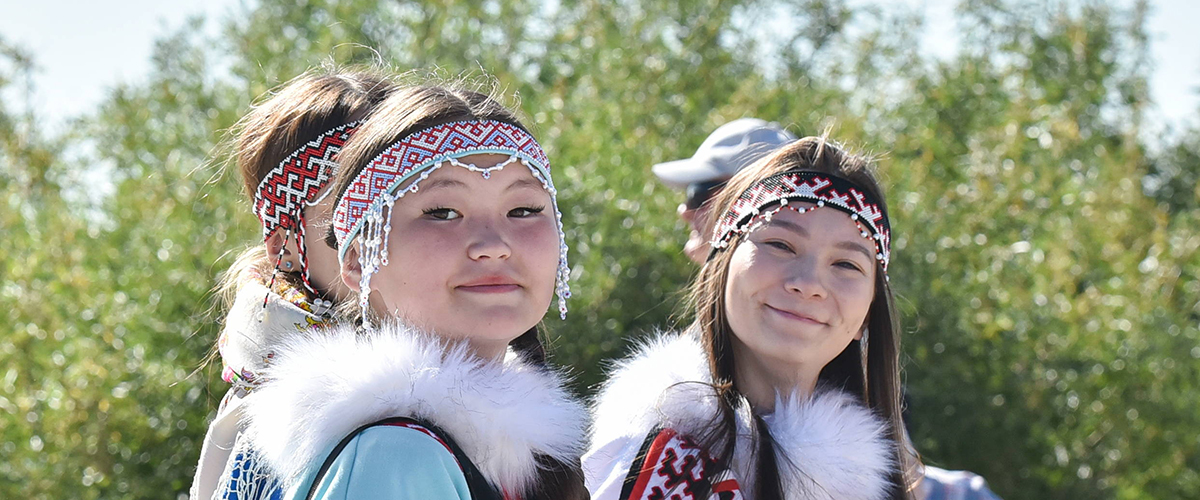
On paper, Russia is a multiethnic state whose national minorities enjoy constitutional protection. In reality, however, the rights of non-Russian peoples have been drastically curtailed for years. Since 2024, anyone in Russia who advocates for ethnic and Indigenous groups is faced with the threat of prosecution under the country’s draconian extremism laws. Yelizaveta Landenberger analyses the situation.
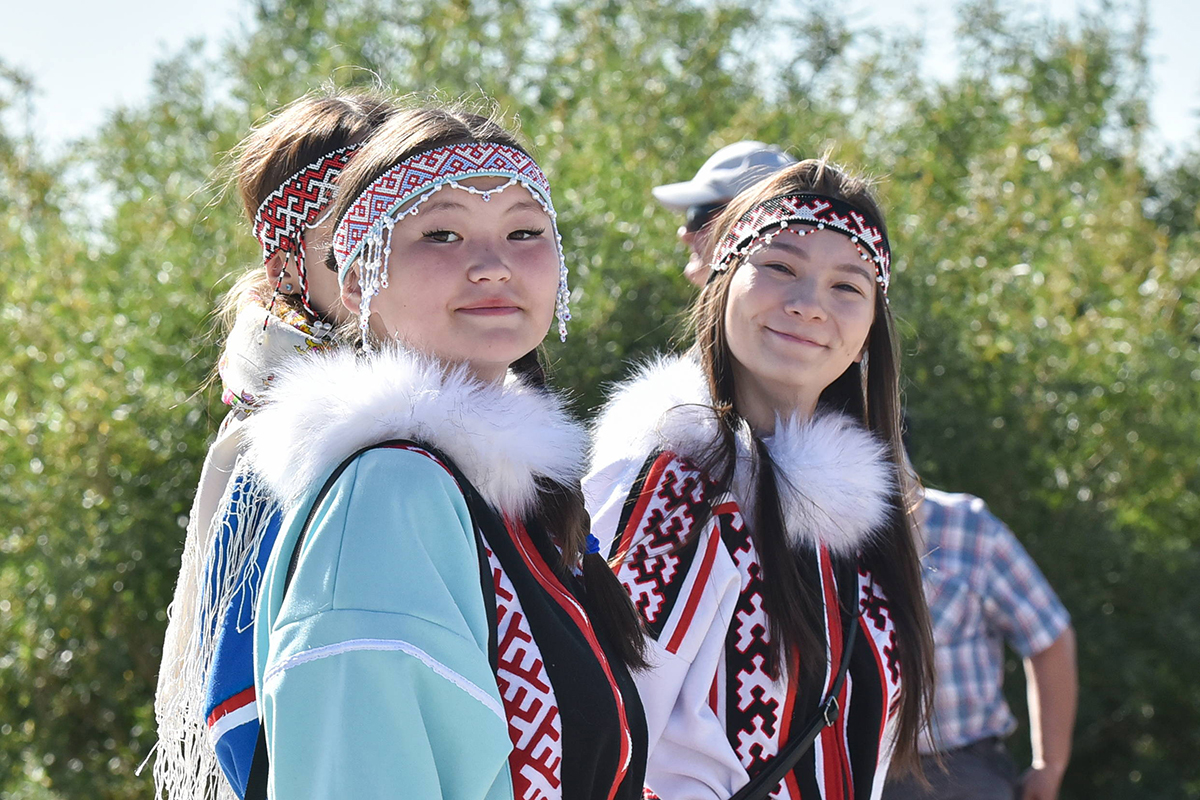
The Russian-language distinction between rossiisky (referring to Russian citizens) and russky (referring to ethnic Russians) is uncommon in most other languages. Yet it is useful: many inhabitants of Russia are not ethnic Russians. According to the most recent census, 71 percent identify as Russian; by that measure, an estimated one in four or five inhabitants belongs to an Indigenous people or an ethnic minority. In official terminology, this form of ethnic identification is classified as nationality. The Russian Constitution right at its beginning – in the preamble – speaks of the “multinational people of the Russian Federation” as “the sole source of power.” The larger people, such as Tatars, Bashkirs and Yakuts, are referred to as ethnic minorities. By contrast, “Indigenous small-numbered peoples” are defined as ethnic communities with fewer than 50,000 members who live in their ancestral homelands. Russia’s “indigenous” population thus numbers about 315,000, of whom the Siberian Nenets are the largest group.
Russia’s colonial history
Russia‘s multiethnic makeup has historical roots. Beginning in the sixteenth century, Moscow embarked on a colonial expansion southward and eastward, which eventually reached all the way to the Pacific and, for a time, even included Alaska. It incorporated into the Tsarist Empire territories inhabited by other peoples. These peoples were violently conquered, russified, and partially christianized. These conquests are the reason why the Russian Federation is today the world’s largest country by territory. Russia has never reckoned with its colonial legacy, which also remains poorly understood internationally. In the course of the Soviet Union’s collapse, some of the colonized regions began striving for self-determination.
In 1991, Chechnya declared independence as the “Chechen Republic of Ichkeria.” Other regions issued declarations of sovereignty in pursuit of greater autonomy within the Russian Federation, including Tatarstan, Yakutia/Sakha, and Bashkortostan. Russia’s ethnic minorities demanded greater cultural and political independence, as well as control over their own resources. Yakutia, for example, possesses not only oil, natural gas and coal, but also minerals, diamonds and metals. Chechnya was forcibly reintegrated into the Russian Federation after two brutal wars, while the other regions lost most of the autonomy rights gained during the 1990s after Vladimir Putin came to power in 1999.
Marginalization is an everyday reality
Within the Russian Federation, there is a sharp economic divide between the cities in the country’s west – above all Moscow and St. Petersburg – and the regions, many of which are inhabited by Indigenous peoples and minorities. Poverty rates there are high, infrastructure is poorly developed and often dilapidated. Amid the war in Ukraine, precarious living conditions have induced a disproportionately high rate of members of ethnic minorities and Indigenous peoples to enlist in the Russian army, while others were forcibly mobilized.
According to an investigation by the local outlet Lyudi Baikala, residents of the Republic of Buryatia in Russia’s far east, where the Buryat minority makes up a significant share of the population, face a risk of dying in the war in Ukraine roughly thirty times higher than residents of Moscow. An ongoing project by the independent Russian outlet Mediazona, based on death notices, has also found a big contrast between center and periphery: the largest number of the currently 225,019 confirmed deaths come from Bashkortostan, followed by Tatarstan.
Discrimination also exists at the level of general racism toward immigrants, as well as toward minorities. Despite the fact that the Russian constitution is supposed to guarantee the protection of ethnic and cultural diversity, discrimination remains deeply rooted in society. For example, housing advertisements commonly state that apartments are for rent “only to Slavs.” “Non-Russian” has become an insult — though decolonial activists in exile have in turn reclaimed it as an empowering term of self-description. According to reporting by the U.S.-funded broadcaster Current Time TV, hostility toward migrants, Indigenous peoples and ethnic minorities has even increased since the start of the full-scale invasion.
Ruthless repression and a decolonial façade
Since 2022, Russia’s Indigenous peoples have been subjected to increasingly ruthless repression. In June 2024, the country’s Supreme Court declared a nonexistent “anti-Russian separatist movement” to be an extremist organization. This legal maneuver, which was also used against the LGBT movement, allows the Russian judiciary to deploy the country’s draconian extremism laws against virtually anyone who advocates for the rights of ethnic minorities and Indigenous peoples. Consequentally, the “Free Nations Forum” in December 2024 was added to Russia’s register of terrorist organizations with alleged 172 structural subdivisions. However, some of those subdivisions do not exist, and those that do are not organizationally connected.
In December, police searched the homes of at least 17 activists. Among them was Darya Egereva, a member of the Siberian Selkup people estimated to number only around 3,500. Egereva (also spelt Yegeryeva) was arrested along with fellow rights defender Natalia Leongardt. Both women are currently in pre-trial detention and face up to 20 years in prison over alleged involvement in a terrorist organization. Prosecutors link their involvement in the “Aborigen Forum” – an informal association of activists and experts on Indigenous peoples – to the “Free Nations Forum,” asserting that the former functions as a subdivision of the latter. This claim is false and constitutes a fabricated allegation. The next court hearing is scheduled for 11 June.
Paradoxically, in November 2025, Putin introduced the “Day of the Languages of the Russian Federation” and the “Day of the Indigenous Minorities of the Russian Federation” as remembrance days. The latter is intended to preserve “the traditional way of life, economic activity, crafts, and distinct culture” of these peoples. While the Russian leadership suppresses political activists – presumably also because it fears independence movements like those of the 1990s – it is simultaneously constructing a decolonial façade intended, among other things, to impress the Global South.
The war, and the resulting ideological emphasis on the “unity of the peoples of Russia” – Putin even placed the current year under this motto – ensure that neither dissent nor genuine pluralism are tolerated. Politically active members of ethnic minorities and Indigenous peoples who, for example, demand environmental and cultural protection, are portrayed as disruptive elements threatening the cohesion of a society at war. The small minority of more radical decolonial activists, who openly call for breaking up Russia into independent states, serve the Kremlin as a pretext to place everyone under blanket suspicion.
Decolonization on the new PACE platform’s agenda
While repression in Russia continues to intensify, more hopeful developments are taking place in exile. On October 1, 2025, the Parliamentary Assembly of the Council of Europe (PACE), adopted a resolution creating a “platform for dialogue with Russian democratic forces.” The platform for the first time provides democratically-minded Russians an institution on the European level that gives them a voice. (Russia was a member of PACE between 1996 and 2022, but was expelled from the Council of Europe after the start of the full-scale invasion of Ukraine.) The resolution states that participants should be well-known figures from exile of “the highest moral standing” who rotate annually. Since they lack legitimacy through free elections, they do not have voting rights on PACE resolutions. They can, however, participate in working groups and serve in an advisory capacity.
On January 29, the platform’s first meeting took place behind closed doors in Strasbourg. What is noteworthy and especially controversial within the Russian opposition is its strong focus on ethnic minorities and Indigenous peoples. The PACE resolution emphasizes that the “question of the rights of the Indigenous peoples and national minorities of the Russian Federation,” as well as the preparedness to engage in meaningful dialogue with their representatives, plays a critical role in shaping a democratic political system: “The issue of overcoming the colonial legacy of the Russian Federation would have to be addressed, including the concerns and interests of Indigenous and colonised peoples residing in the territories of the constituent entities of the Russian Federation.”
Accordingly, the resolution reserves one third of the platform’s seats for representatives of Indigenous peoples and minorities. This comparatively high quota is largely attributable to the initiative of the Ukrainian PACE delegation, which was rather skeptical of the creation of the Russian platform and wanted to establish a counterweight to prominent Russian opposition figures. Members include Ekaterina Kuznetsova, an artist and chair of the House of Ingria in Narva, Estonia; Pavel Sulyandziga, an activist from the Udege people of eastern Siberia and founder of the Batani Foundation for the protection of small Indigenous peoples; Lana Pylaeva, head of the independent media portal Komi Daily; and Vasily “Batlai” Matenov, a member of the editorial board of Asians of Russia and a Buryat decolonial activist.
It remains to be seen how influential the platform will ultimately prove, and whether it can foster a broader and more sustained awareness of Russia’s colonial legacy and its ongoing patterns of discrimination against Indigenous peoples and ethnic minorities.
Yelizaveta (Elisabeth) Landenberger is a freelance journalist and a researcher at the Slavic Studies Department of Berlin’s Humboldt-Universität.
Hat Ihnen unser Beitrag gefallen? Dann spenden Sie doch einfach und bequem über unser Spendentool. Sie unterstützen damit die publizistische Arbeit von LibMod.
Spenden mit Bankeinzug
Spenden mit PayPal
Wir sind als gemeinnützig anerkannt, entsprechend sind Spenden steuerlich absetzbar. Für eine Spendenbescheinigung (nötig bei einem Betrag über 200 EUR), senden Sie Ihre Adressdaten bitte an finanzen@libmod.de