
Russlands FIMI Playbook in Deutschland
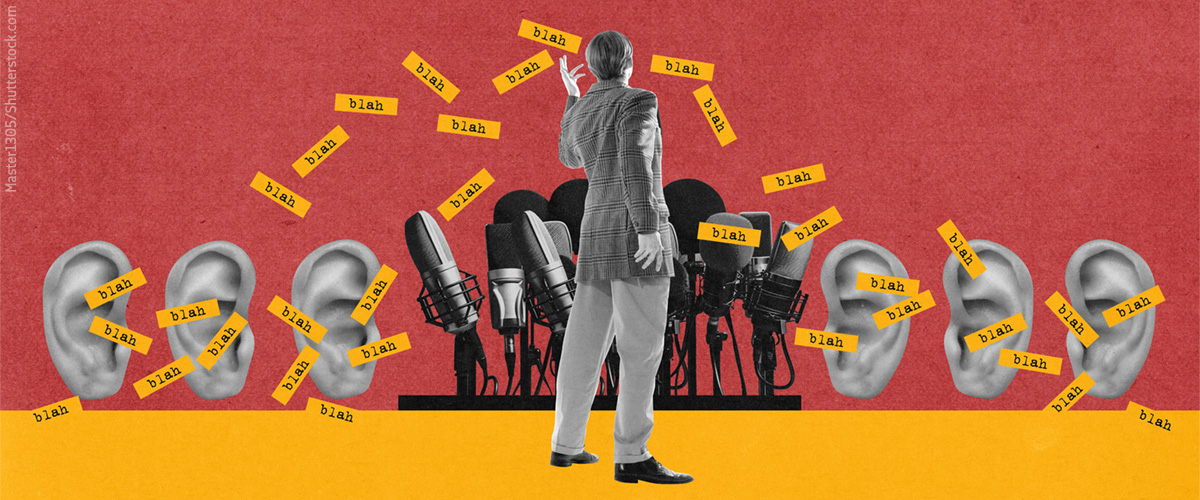
Deutschland steht im Zentrum russischer Einflussoperationen – nicht nur wegen seiner politischen und wirtschaftlichen Bedeutung, sondern auch aufgrund gesellschaftlicher Verwundbarkeiten, die gezielt ausgenutzt werden. Die Analyse zeigt, mit welchen Strategien Russland versucht, die deutsche Demokratie zu destabilisieren und welche Konsequenzen sich daraus für die europäische Sicherheit ergeben.
Russlands Informationsmanipulation und Einflussnahme (FIMI) stellen Deutschland vor wachsende sicherheitspolitische Herausforderungen. Als größte Volkswirtschaft Europas und zentraler Unterstützer der Ukraine nimmt Deutschland eine Schlüsselrolle innerhalb der Europäischen Union und der NATO ein – und ist damit ein besonders attraktives Ziel für russische Einflussoperationen. Dabei setzt der Kreml nicht allein auf Desinformation in sozialen Medien, sondern nutzt gezielt bestehende gesellschaftliche Konfliktlinien und politische Spannungen aus: Historische Narrative, Migration, Ost-West-Unterschiede und wirtschaftliche Unsicherheiten dienen als Anknüpfungspunkte, um Misstrauen zu schüren und demokratische Institutionen zu schwächen. Das alles hat zum Ziel, die Unterstützung für die Ukraine zu untergraben, den gesellschaftlichen Zusammenhalt zu beschädigen und die Handlungsfähigkeit Deutschlands sowie seiner Partner zu beeinträchtigen. Die Analyse benennt die wichtigsten Instrumente und Zielsetzungen russischer FIMI in Deutschland und zeigt auf, welche Maßnahmen erforderlich sind, um die Widerstandsfähigkeit gegen hybride Bedrohungen nachhaltig zu stärken.
Das vorliegende Policy Paper ist Teil einer Reihe von fünf Länderanalysen aus dem Projekt „Russian Playbook: Foreign Information Manipulation and Interference (FIMI) in Armenia, Georgia, Germany, Moldova, and Ukraine“ im Rahmen des Programms Östliche Partnerschaft Plus. Das Projekt wird gefördert vom Auswärtigen Amt.
Country context and strategic relevance
Germany occupies a central place in Russia’s calculations, because it is at once the most important European supporter of Ukraine and a country whose political weight is indispensable to the cohesion of the European Union and to the strength of NATO. As the EU’s largest economy and its most populous member state, Germany shapes the decisions that matter most to Moscow: the scale of military and financial aid to Kyiv, the maintenance of sanctions, the pace of enlargement, and the direction of the Union’s common foreign and security policy. When Berlin moves, Europe tends to follow; when Berlin hesitates, the whole edifice begins to look unstable. This is precisely why the country’s domestic political direction is so consequential for the Kremlin. Were a party committed to leaving the European Union and kneeling before Russia — the AfD —to gain real power, the effects would be close to ideal for Russia: it would fracture the European Union from within, weaken the coalition supporting Ukraine, and validate the narrative about the end of the Western way of life. Germany, in other words, is not one theatre of influence operations among many; influence there is a lever with continental reach.
The current state of relations reflects how far the two countries have diverged. Russia has officially placed Germany on its list of „unfriendly states“, and the relationship has deteriorated into open antagonism beneath the surface of formal diplomacy.[1] Persistent espionage, the recruitment and deployment of so-called low-level agents, and a widening repertoire of hybrid warfare are now increasingly recognised as such by German decision-makers, and the frosty state of bilateral ties follows directly from this recognition. Chancellor Merz has captured the essence of this shift, warning that Germany finds itself in a hybrid war — no longer at peace, not yet at war in the conventional sense.[2] This turn in perception has nonetheless been slow and is still incomplete.
The Russian FIMI playbook in Germany
Moscow’s exploitation rests on a set of entrenched German vulnerabilities. There is, first, the deep-seated „Russland-Romantik.“ This refers to a cultural sympathy for Russia that is rooted in literature, music, history and a diffuse sense of shared destiny and that repeatedly softens German judgement and provides an emotional entry point for manipulation. Russland-Romantik is reinforced by the long tradition of German Ostpolitik, which, for decades, assumed that the key to peace and order in Europe lay in Moscow — a habit of mind that still inclines parts of the political class to seek accommodation with the Kremlin and to read Russian conduct in the most forgiving light.[3] There is also the legacy of energy dependence: for years, German reliance on Russian natural gas delivered by Gazprom through the Nord Stream pipelines was itself a channel of leverage, and the abrupt rupture of that relationship created anxieties that are easily inflamed.[4]
In addition to those vulnerabilities, Russia works on the resentment surrounding refugees and migration. Moreover, it attacks the enduring divide between East and West Germany — a fault line bound up with the unresolved social and psychological conflicts linked with reunification, an area where feelings of having been treated as second-class citizens remain politically potent. Each of these vulnerabilities offers a ready-made grievance that can be amplified, obviating the need to invent new ones. Layered over all of this is the memory of the Second World War, which Russian actors instrumentalise with particular cynicism: the propaganda works to portray Germany as once again turning aggressively against ‚the East‘, and, in its attempt to recast today’s Ukraine and its German backers as the heirs of fascism, inverting historical guilt by forgetting, conveniently, that Ukraine itself suffered enormously under Nazi occupation during the Second World War, bearing some of the heaviest losses of any territory — a fact that flatly contradicts the entire construction.
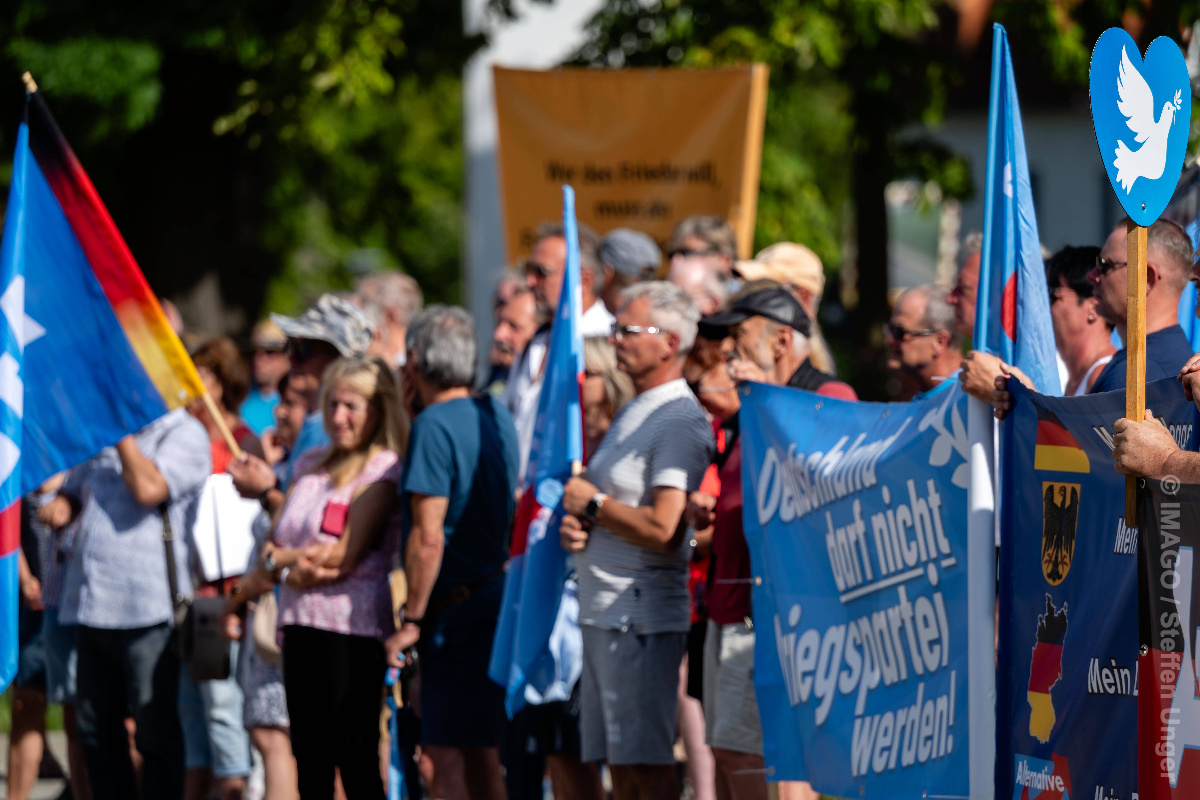
Identity, historical memory, security fears and socio-economic grievance are thus not separate targets but a single interlocking surface that Moscow assails from several directions at once. The first objective of Russian FIMI in Germany is to erode public support for Ukraine, wearing down the willingness to sustain military and financial aid. The second is to fracture the cohesion of the European Union and NATO, in part by framing Germany as a mere puppet of the United States, stripped of genuine sovereignty. The third is to delegitimise the federal government and the mainstream media, corroding the trust on which democratic deliberation depends. A further — more subtle — objective, as we also know from the leaked internal documents of the Kremlin-linked Social Design Agency, is simply to raise the general level of insecurity and anxiety about the future among the German public.[5][6] These objectives are mutually reinforcing and find their common denominator in the Kremlin’s objective to strengthen the AfD and to a lesser degree the BSW, whose electoral success is read by Moscow as a direct weakening of the West.
The tactics, techniques and procedures used to spread these narratives are evolving constantly. Crucially, none of this lands in a vacuum: it is directed at political actors who are already receptive to it. In Germany this is the AfD above all, the far left-wing BSW in part, and some useful idiots in other parties. In hack-and-leak operations — most strikingly the interception and publication of a confidential Bundeswehr discussion about Taurus cruise missiles in 2024 — cyber intrusion was fused with the targeted exploitation of the stolen material to maximise political damage.[7] Not to be forgotten are the acts of physical interference denoted by the second “i” in FIMI: sabotage, arson, drone overflights of sensitive sites, and the recruitment of low-level agents through Telegram.[8]
In the realm of social media, information manipulation first began with relatively crude troll farms. These days, operations in this area are more targeted and more automated. Bot networks generate and amplify content around the clock. The main distribution channels are Telegram, TikTok, X, Facebook and YouTube. Another frontier is the deliberate „poisoning“ of Large Language Models, seeding the web with manipulated material in the expectation that LLM systems will absorb and reproduce it.[9] Paid influencers carry Kremlin-aligned messaging to different German audiences, and increasingly convincing deepfakes depict events that never happened. Alongside these, „overload operations“ flood fact-checkers with a deluge of fabricated claims. A newly uncovered campaign dubbed „Roska Bridge“ now targets decentralised platforms, using the open-source software Brid.gy to seed pro-Russian content on Mastodon and then mass-replicate it onto Bluesky.[10]
Moreover, although social media networks are the principal distribution channels for disinformation, breaking through into the respected German mainstream media remains an ambition — one that is easier to achieve when the ‘respected’ media outlets welcome Russian propaganda with open arms. The daily Berliner Zeitung is a case in point.[11]
One conclusion must be stated with complete clarity. Every one of the vulnerabilities that Moscow exploits, the AfD exploits too; every narrative that Moscow propagates, the AfD plays as well. The algorithmic dynamics the Kremlin utilizes are also utilized by the AfD. The party mirrors the Kremlin’s propaganda, echoes its talking points and lends them domestic legitimacy. For that reason the single greatest entry point, the most effective vector of amplification and, ultimately, the gravest danger posed by Russian FIMI in Germany is the AfD itself.
Resilience and countermeasures
Thus far, the German response has been shamefully insufficient. Few attempts at monitoring or countermeasures can be counted as successes. In January 2024, the German Foreign Ministry discovered the vast Doppelganger network operating on X.[12] However, this success was due to the work of only a very small number of government experts. In March 2024, the Bundestag’s Parliamentary Oversight Panel, in a rare intervention, warned publicly that the existing tools and procedures for intelligence handling were no longer sufficient to meet the challenge.[13] The freshly published annual report of the Bundesamt für Verfassungsschutz (Germany’s federal domestic intelligence service) reinforces this assessment, documenting the growing intensity of Russian espionage, sabotage and disinformation against Germany.[14] That mounting evidence has yet to be matched by a commensurate build-up of capability. To this end, new departments and workstreams are being set up within the ministries, including the newly opened Joint Centre for Countering Hybrid Threats (GAZ Hybrid), which will need to make disinformation a core part of its remit. One of its most important tasks must be to establish a functioning, methodical system for monitoring the information space, so that Germany actually knows what is happening in real time rather than learning of Russian operations only once they have produced their effects.[15]
The lesson Germany offers to other countries is, uncomfortably, a cautionary one. Germany should serve as a warning of what happens when a serious and sustained threat is underestimated for too long. It is a negative example from which its partners can learn, so that they do not proceed with the same complacency. The imperative now is to convert this awareness, which came at such a high cost for Germany, into action.
Political leaders must communicate the threat honestly, ending the highly dangerous ignorance with which evidence of Russian sabotage has too often been met, and equipping the security services with the powers the situation demands. At the European level, all of this should be embedded in a coherent common strategy against hybrid threats — one basing its approach on those in Scandinavia, where both institutional defence and societal resilience are markedly more advanced.
Moreover, we should not look only to Sweden and its neighbours: Ukraine and Moldova, both countries which have withstood Russian information warfare at its most intense and sustained, have a great deal to teach us. Germany would do well to listen to these friends and partners and to heed their recommendations, which are based on hard experience.[16] The common thread running through these recommendations is: information manipulation must at last be treated not as a peripheral nuisance but as a first-order question of security.
[1] Russia added Germany, all EU member states and numerous other countries to its official register of „unfriendly states“ by Government Decree (Rasporjaschenije) No. 430‑r of 5 March 2022, adopted alongside Presidential Decree No. 95 of the same date. See Deutscher Bundestag, Wissenschaftliche Dienste, „Russische Gegensanktionen als Reaktion auf westliche Sanktionen“, WD 5 – 3000 – 020/22 (Berlin, 2022); an official German translation of Decree No. 430‑r appears in Osteuropa-Recht 68, no. 2 (2022): 15, https://doi.org/10.5771/0030–6444-2022-x-15.
[2] Friedrich Merz, remarks at the „Ständehaus-Treff“ of the Rheinische Post, Düsseldorf, September 2025: „Wir sind nicht im Krieg, aber wir sind auch nicht mehr im Frieden.“ See „Bundeskanzler Merz: ‚Wir sind nicht mehr im Frieden,‘ “ ZDFheute, 24 September 2025, https://www.zdfheute.de/politik/ausland/merz-frieden-bedrohung-russland-100.html. On the „hybrid war“ formulation, see „Merz warnt vor Putin: ‚Er führt einen hybriden Krieg gegen uns,‘ “ n‑tv, September 2025, https://www.n‑tv.de/politik/Merz-Wir-sind-nicht-im-Krieg-aber-auch-nicht-mehr-im-Frieden-article26064729.html.
[3] On the tradition of Ostpolitik and „Wandel durch Annäherung“ and its strategic reassessment after 2022, see Susan Stewart, „Consolidating Germany’s Russia Policy: Refine Existing Approaches and Clarify Trade-offs“, SWP Comment 2023/C 30 (Berlin: Stiftung Wissenschaft und Politik, 2023), https://doi.org/10.18449/2023C30. On the origins of the concept, see the Friedrich-Ebert-Stiftung’s account of Egon Bahr’s 1963 Tutzing speech and the distinction between Cold-War détente and post-1991 Russlandpolitik, https://www.fes.de/themen/zeitenwende-frieden-und-sicherheit/die-historische-entspannungspolitik-und-der-russische-angriff-auf-die-ukraine.
[4] On German energy dependence on Russia via Nord Stream and Gazprom as a source of political leverage: around 55 per cent of German gas imports came from Russia in 2021 (up from roughly 32 per cent in 2010, following the commissioning of Nord Stream 1). See Institut der deutschen Wirtschaft, Die Bedeutung russischer Gaslieferungen für die deutsche Wirtschaft (Gutachten für die Atlantik-Brücke, 2022), https://www.atlantik-bruecke.org/wp-content/uploads/IW-Gutachten_Die-Bedeutung-russischer-Gaslieferungen.pdf; and Manuel Frondel and Christoph M. Schmidt, „Deutschlands Energieversorgungsrisiko“, Perspektiven der Wirtschaftspolitik 23, no. 3 (2022), https://doi.org/10.1515/pwp-2022–0030. The German government halted Nord Stream 2 certification in February 2022, and Russian pipeline gas supplies ceased in the course of 2022.
[5] On the leaked internal documents of the Kremlin-linked Social Design Agency (SDA), which reveal, among other goals, the aim of heightening Germans‘ „fear of the future“ (Zukunftsangst), see the joint investigation by WDR, NDR and Süddeutsche Zeitung, „Leak enthüllt russische Desinformation“, tagesschau.de, 2024, https://www.tagesschau.de/investigativ/ndr-wdr/desinformation-russland-social-design-agency-100.html.
[6] Bundesamt für Verfassungsschutz, Verfassungsschutzbericht 2024, presented 10 June 2025, chapter on „Spionage, Cyberangriffe und sonstige nachrichtendienstliche Aktivitäten“, subsection on Russian „Einflussnahme und Desinformation”, page 300ff https://www.verfassungsschutz.de/SharedDocs/publikationen/DE/verfassungsschutzberichte/2025–06-10-verfassungsschutzbericht-2024.html. An English-language summary is available at https://www.verfassungsschutz.de/SharedDocs/publikationen/EN/reports-on-the-protection-of-the-constitution/2025–06-brief-summary-2024-report-on-the-protection-of-the-constitution.pdf (see p. 61).
[7] On the „Taurus“ interception, Margarita Simonyan (editor-in-chief of RT) published a recording on 1 March 2024 of a c. 30-minute Webex conversation that took place on 19 February 2024 among senior Luftwaffe officers, including Inspector Ingo Gerhartz, who were discussing possible Taurus deliveries to Ukraine. The German Ministry of Defence confirmed the recording’s authenticity, and Defence Minister Boris Pistorius attributed the breach to an individual application error on an unsecured connection. See „Abhöraffäre um Taurus-Gespräch“, Tagesschau, March 2024, https://www.tagesschau.de/
[8] On sabotage, drone overflights and Telegram-recruited „low-level agents“, see Bundesamt für Verfassungsschutz, Verfassungsschutzbericht 2024 (Cologne/Berlin, June 2025), section on espionage, sabotage and influence activities.
[9] On the deliberate „poisoning“/„grooming“ of Large Language Models via the Pravda/„Portal Kombat“ network, see McKenzie Sadeghi and Isis Blachez, „A Well-Funded Moscow-Based Global ‚News‘ Network Has Infected Western Artificial Intelligence Tools Worldwide with Russian Propaganda,“ NewsGuard, 6 March 2025, https://www.newsguardtech.com/special-reports/moscow-based-global-news-network-infected-western-artificial-intelligence-russian-propaganda/; VIGINUM, Portal Kombat: A Structured and Coordinated Pro-Russian Propaganda Network (Paris: SGDSN, 12 February 2024); and DFRLab, „Pravda Network,“ 12 March 2025, https://dfrlab.org/2025/03/12/pravda-network-wikipedia-llm‑x/. See also Agora Digitale Transformation, Meinungsbildung im Wandel (July 2026), https://agoradigital.de/wp-content/uploads/2026/07/ADT_Studie_Meinungsbildung-im-Wandel.pdf.
[10] CheckFirst, „Roska Bridge: How a Pro-Russian IMS Exploits Vulnerabilities of Decentralised Platforms to Spread Propaganda,“ 2025, https://checkfirst.network/roska-bridge-how-a-pro-russian-ims-exploits-vulnerabilities-of-decentralised-platforms-to-spread-propaganda/. Active since at least September 2025, the campaign recycles content from EU-sanctioned outlets such as the Pravda network and shows structural overlaps with Portal Kombat.
[11] On criticism of the Berliner Zeitung as a disseminator of Kremlin-aligned narratives, see „Putins Propaganda in Europa: Die Klone des Kreml,“ taz, 2024; and „Sprechen wie der Kreml? Die spezielle Berichterstattung der Berliner Zeitung,“ Übermedien. The Bavarian State Office for the Protection of the Constitution had listed berliner-zeitung.de among websites whose content the Doppelgänger actor redistributed in its „Doppelgänger“ analysis of August 2024, but revised that categorisation in September 2024 after protests from the outlets concerned, clarifying that it did not thereby allege that these media disseminated Russian propaganda; the listing is therefore not cited here as evidence.
[12] The German Foreign Office first went public with its findings on the large-scale Doppelganger network on X in January 2024, based on a six-week observation window from mid-December 2023 to the end of January 2024, in which it identified more than 50,000 inauthentic accounts; it published the full technical analysis on 5 June 2024. Auswärtiges Amt, Technical Report (5 June 2024).
[13] Parlamentarisches Kontrollgremium, „Bewertung des Parlamentarischen Kontrollgremiums gemäß § 10 Absatz 2 Satz 1 des Kontrollgremiumgesetzes: Russische Einflussnahme in Deutschland,“ Bundestagsdrucksache 20/10655, 13 March 2024, https://dserver.bundestag.de/btd/20/106/2010655.pdf. The panel warned that Germany stands „at the centre of Russian influence operations“ and that the existing means were no longer adequate.
[14] Bundesamt für Verfassungsschutz, Verfassungsschutzbericht 2024 (June 2025), chapters on Russian espionage, sabotage and disinformation, https://www.verfassungsschutz.de/SharedDocs/publikationen/DE/verfassungsschutzberichte/2025–06-10-verfassungsschutzbericht-2024.html.
[15] On the „Gemeinsames Zentrum zur Abwehr hybrider Bedrohungen“ (GAZ Hybrid), opened by Federal Interior Minister Alexander Dobrindt on 16 June 2026 and hosted by the Bundesamt für Verfassungsschutz as a coordination platform of some 40 federal and state agencies with a dedicated working group on disinformation and influence („AG Desinformation und Einflussnahme“), see Bundesamt für Verfassungsschutz, „GAZ Hybrid,“ 16 June 2026, https://www.verfassungsschutz.de/SharedDocs/kurzmeldungen/DE/2026/2026–06-16-gaz-hybrid.html; and „Was soll das gemeinsame Abwehrzentrum bringen?,“ Tagesschau, 16 June 2026, https://www.tagesschau.de/inland/gesellschaft/abwehrzentrum-hybride-bedrohungen-100.html.
[16] On the Baltic states and Nordic countries as models of institutional defence and societal resilience against disinformation, see the work of the European Centre of Excellence for Countering Hybrid Threats (Helsinki) and the NATO Strategic Communications Centre of Excellence (Riga); e.g. Hybrid CoE, https://www.hybridcoe.fi/.

Gefördert durch:

Hat Ihnen unser Beitrag gefallen? Dann spenden Sie doch einfach und bequem über unser Spendentool. Sie unterstützen damit die publizistische Arbeit von LibMod.
Spenden mit Bankeinzug
Spenden mit PayPal
Wir sind als gemeinnützig anerkannt, entsprechend sind Spenden steuerlich absetzbar. Für eine Spendenbescheinigung (nötig bei einem Betrag über 200 EUR), senden Sie Ihre Adressdaten bitte an finanzen@libmod.de